



The pressure on today’s lab is unending. Whether it’s a diagnostic lab or an R&D lab, there’s no escaping the constant demand for more. Higher throughput and faster turn-around times with data that will withstand scrutiny.
The era wherein we were reliant on manually pipetting samples within a high-volume setting is on its way out, because quite literally, it doesn’t add up on the side of humanity. It isn’t just about going quicker; it’s about cost.
As researchers spend several hours at the lab bench working on repetitive procedures, fatigue begins to occur. And with fatigue, variability follows. But automation alters all this. By delegating repetitive procedures to automated systems, research labs will no longer be faster. They will be better.
It should be noted that reviews on lab automation have pointed out that minimizing human involvement leads significantly to a reduction in errors within experiments. It is about giving scientists a chance to be scientists.
What Is Laboratory Automation And Precision Robotics?
While the terms are often used interchangeably, there is a nuance here that matters for a lab manager making purchasing decisions.
Laboratory automation refers to the overarching systems and workflows. It is the integration of hardware and software to streamline a process. It’s the “big picture” strategy of moving a sample from extraction to data analysis with minimal touchpoints.
Precision robotics is the engine room of that strategy. We are talking about the actual hardware: the robotic arms, the automated liquid handlers, and the integrated sensors that physically manipulate samples with microliter (or sub-microliter) accuracy.
In a modern context, you’ll see this tech doing the heavy lifting in workflows like qPCR preparation, Next-Generation Sequencing (NGS) library prep, serial dilutions, and bead clean-ups. It is the difference between a researcher hoping their p10 pipette is calibrated correctly and a machine using optical sensors to verify liquid levels in real-time.
Key Benefits For Labs
Why invest here? Typically, the ROI will be evident once you analyze three different factors: reproducibility, throughput, and contamination control.
First, let’s discuss reproducibility. Repetitive pipetting, no matter how competent the pipetter, will have a large Coefficient of Variation (CV), even more so as it approaches smaller volumes. Contemporary pipetting heads are capable of better than 1% CVs at volumes beyond which a human hand would shake. This is critical for applications like qPCR, where a slight variation in template volume can skew Cq values and ruin an experiment.
Then there is the time factor. It’s not just that robots are fast; it’s that they don’t take breaks, and they don’t get Repetitive Strain Injury (RSI). Implementing automation allows a lab to process significantly larger batches of samples without burning out the team. As noted in recent studies on lab efficiency, automation creates a “walk-away” workflow where the bottlenecks of manual processing are effectively removed.
Finally, we have to consider purity. Contamination is the silent killer of data. Automated systems standardize the environment by using HEPA filtration, enclosed tip waste disposal, and UV sterilization to keep the workspace pristine. Plus, smaller, modern systems often have a surprisingly compact footprint, meaning you save on bench space and service costs compared to the massive, room-sized liquid handlers of the past.
Typical Automated Systems & Where Precision Robotics Fit
When people hear “robotics,” they often imagine massive modular platforms that take up half a room. While those exist for high-throughput screening centers, the real revolution for most research and diagnostic labs is happening on the benchtop.
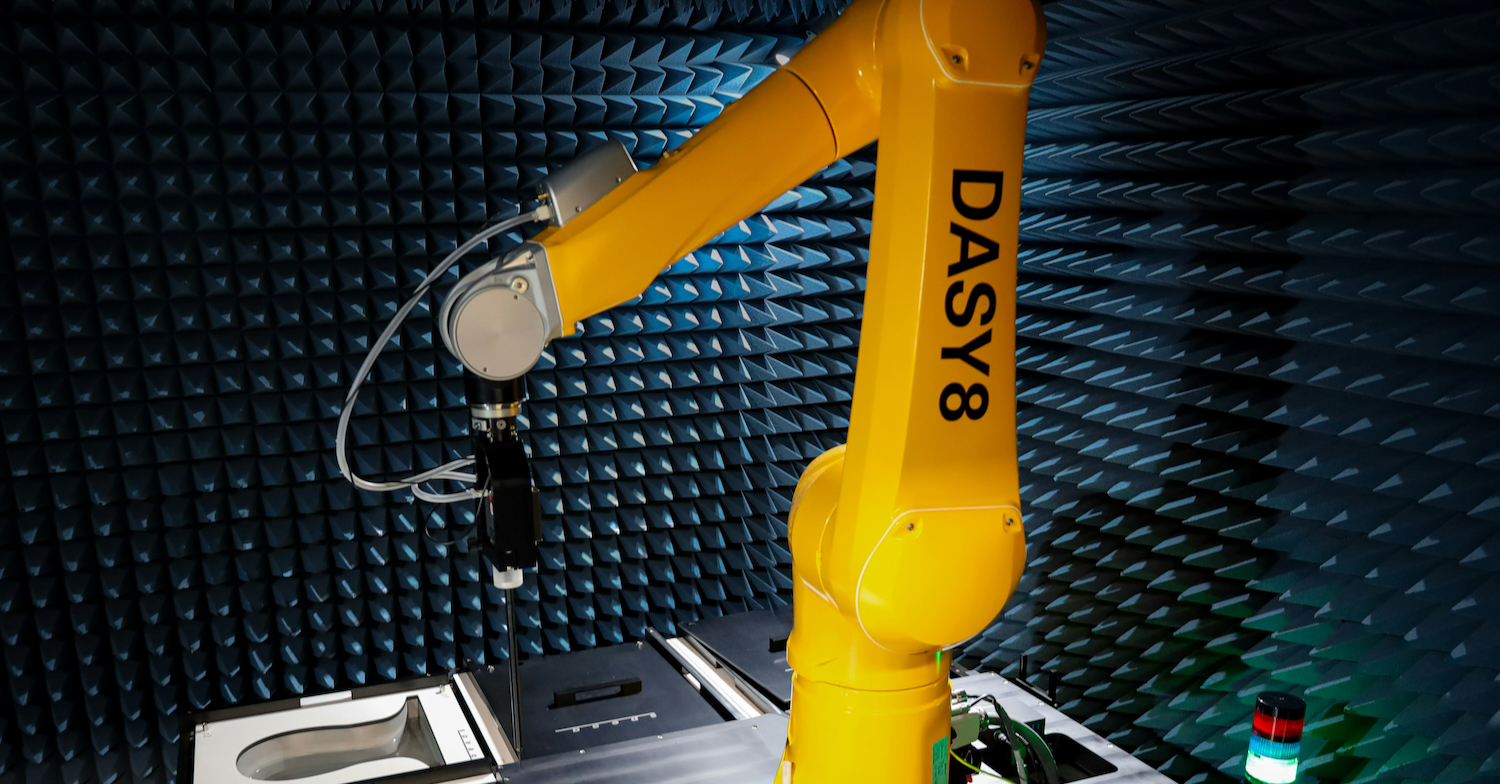
The market has shifted toward compact, accessible units that don’t require a dedicated engineer to run. These systems bridge the gap between a manual pipette and a fully integrated factory line. They are smarter, too. We aren’t just looking at dumb arms moving up and down anymore. We are seeing systems equipped with high-precision cameras for optical calibration, pressure sensors for liquid level detection, and closed-loop axis control to ensure the tip is exactly where it needs to be, every single time.
This is where the form factor really counts. A compact liquid handler can provide lab-grade accuracy and fit on a standard benchtop while automating common qPCR and NGS prep steps.
By choosing a system that combines a small footprint with advanced sensing features, such as interchangeable pipette heads and visual deck confirmation, labs can get the precision of a high-end platform without the logistical nightmare of installing a massive workstation.
Implementation Considerations & Pitfalls
Buying the robot is the easy part. Getting it to work seamlessly in your daily routine is where the real work happens. The most common stumbling block is protocol validation.
You cannot simply copy-paste a manual protocol into a robot’s software and expect perfection. Viscosities differ, and aspiration speeds need tweaking. You also need to ensure your consumables, like tips, plates, and tubes for example, are strictly compatible. A robot cannot “feel” if a tip is slightly loose unless it has advanced pressure sensing.
Calibration used to be a major headache, requiring service call-outs. However, modern systems with integrated cameras can often self-calibrate or guide the user through a quick setup, reducing that burden significantly. Still, Standard Operating Procedures (SOPs) must be updated to reflect these new digital workflows.
Data integration is another hurdle. Does the machine talk to your LIMS? Can you import a CSV file easily? Smooth data flow is just as important as smooth liquid flow. Finally, don’t ignore the physical maintenance: regular UV cycles and HEPA filter checks are non-negotiable for contamination control.
Future Trends: Autonomous Labs And Ai-Driven Workflows
We are moving past simple automation into the era of the “autonomous lab.” The future isn’t just a robot following a script. It’s a system that can make decisions.
Trends emerging are AI-based workflows, where based on the first run data, the system automatically adjusts parameters for a subsequent second run. The “self-driving labs” idea, which emerged on these grounds, is increasingly finding favor, especially within drug discovery and materials research.
Some recent articles in publications such as Royal Society Open Science describe ways to improve discovery cycles with orders-of-magnitude gains via foundation models and methods brought together with robotics. What it all means for a typical lab manager and eventually for you might include better scheduling software that can forecast bottlenecks and allow “check-in” functionality so you can check on your run from your phone while at home.
Practical Takeaways For Lab Managers
If you are looking to modernize, start here:
- Start small: Pilot a compact liquid handler for a single high-volume assay (like qPCR setup) before automating everything.
- Standardize plastics: Variation in consumables kills robotic accuracy. Pick a brand and stick to it.
- Update the SOPs: Guidelines for calibration should be rewritten to protocols and file handling.
- Measure the win: Track your error rates and hands-on time before and after implementation to prove ROI.
Conclusion
Automation is no longer a luxury, it’s a necessity for precision and scalability in the lab. Take repetitive tasks off of your team’s plate and onto robotic systems, ensuring data integrity while giving them their time back. It’s time to request a demo and see the difference a small footprint can make.
