




The weekend is already planned. Campsite booked, bags nearly packed, kids counting down. However, before the car is loaded, there is one question worth settling.
How do you keep everyone’s Apple devices running when the nearest power outlet is hours away?iPads for the kids during the drive and the downtime. iPhones as the map and the only line back to the outside world. A MacBook for work that probably cannot wait until Monday. That is a lot to power without access to the grid.
A Portable Power Station is the right answer, and two specs inside one matter for Apple users specifically. LiFePO4 battery chemistry is more stable and longer-lasting than standard lithium-ion. Pure sine wave AC output delivers the type of power Apple devices are built to receive from a wall outlet.
Cygnett, a Melbourne-founded tech accessories brand, builds Portable Power Stations with both. Here is what each of those means in practice.
What’s the difference between a Power Bank and a Portable Power Station?
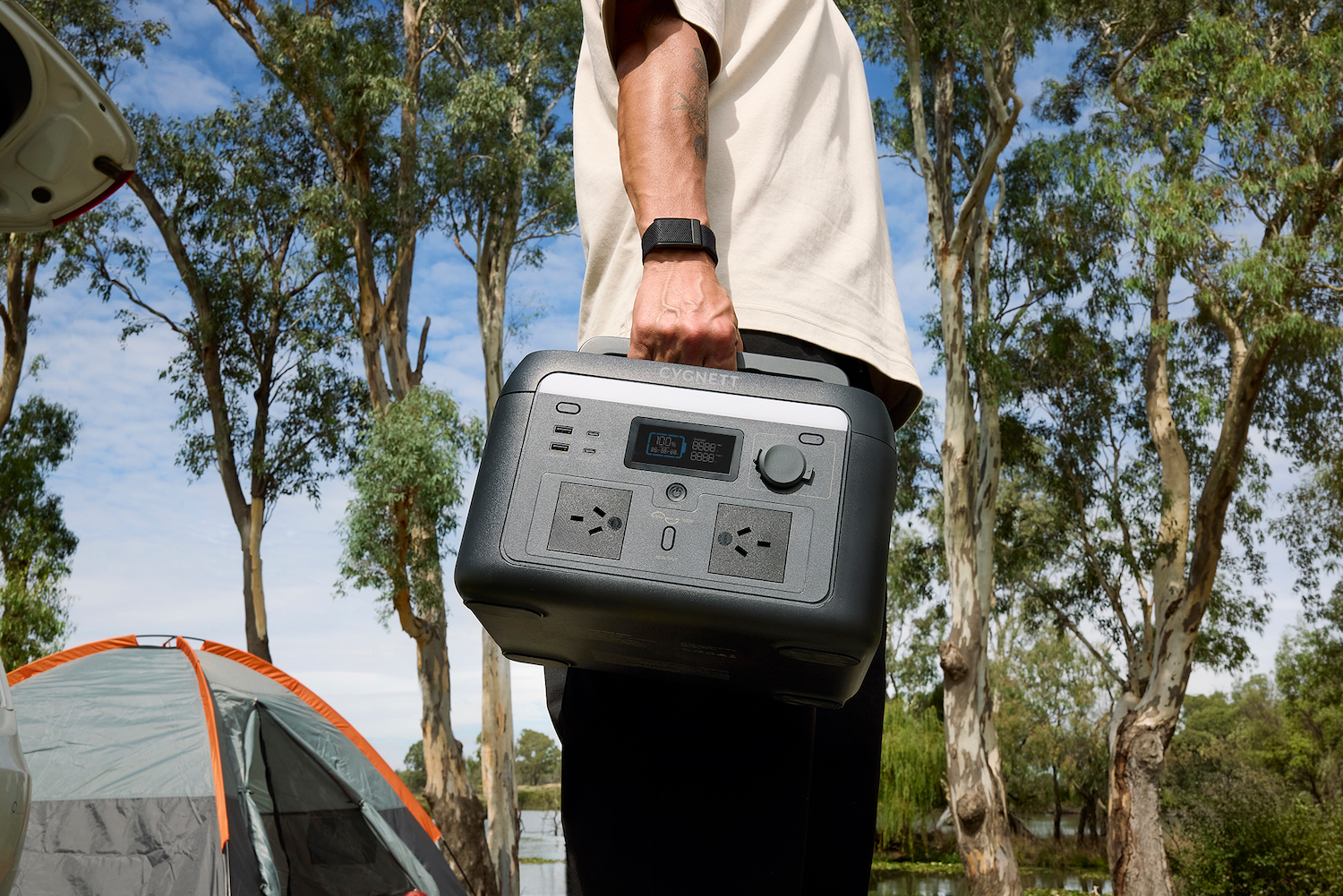
A Power Bank is a compact battery designed to top up a phone or tablet on the move. A Portable Power Station is a larger unit with AC output, built to run multiple devices at once, including laptops, over an extended period.
The key difference is capacity and output type. Power Banks measure capacity in milliamp hours (mAh). That figure tells you how much charge is available for a phone but nothing about powering a laptop. Portable Power Stations measure in watt-hours (Wh), which maps directly to total usable energy across every device you connect.
Also, most Power Banks have a maximum wattage of 65W spread across ports, which can sometimes struggle to charge multiple devices at full speed. A Portable Power Station with AC output can provide significantly more power, letting you run a MacBook, an iPad, and a couple of phones simultaneously while maintaining fast charging speeds.
The difference a pure sine wave output and LiFePO4 chemistry makes to sensitive electronics
The quality of the power source still matters. A poorly designed inverter can produce inconsistent power that sensitive electronics may not appreciate.
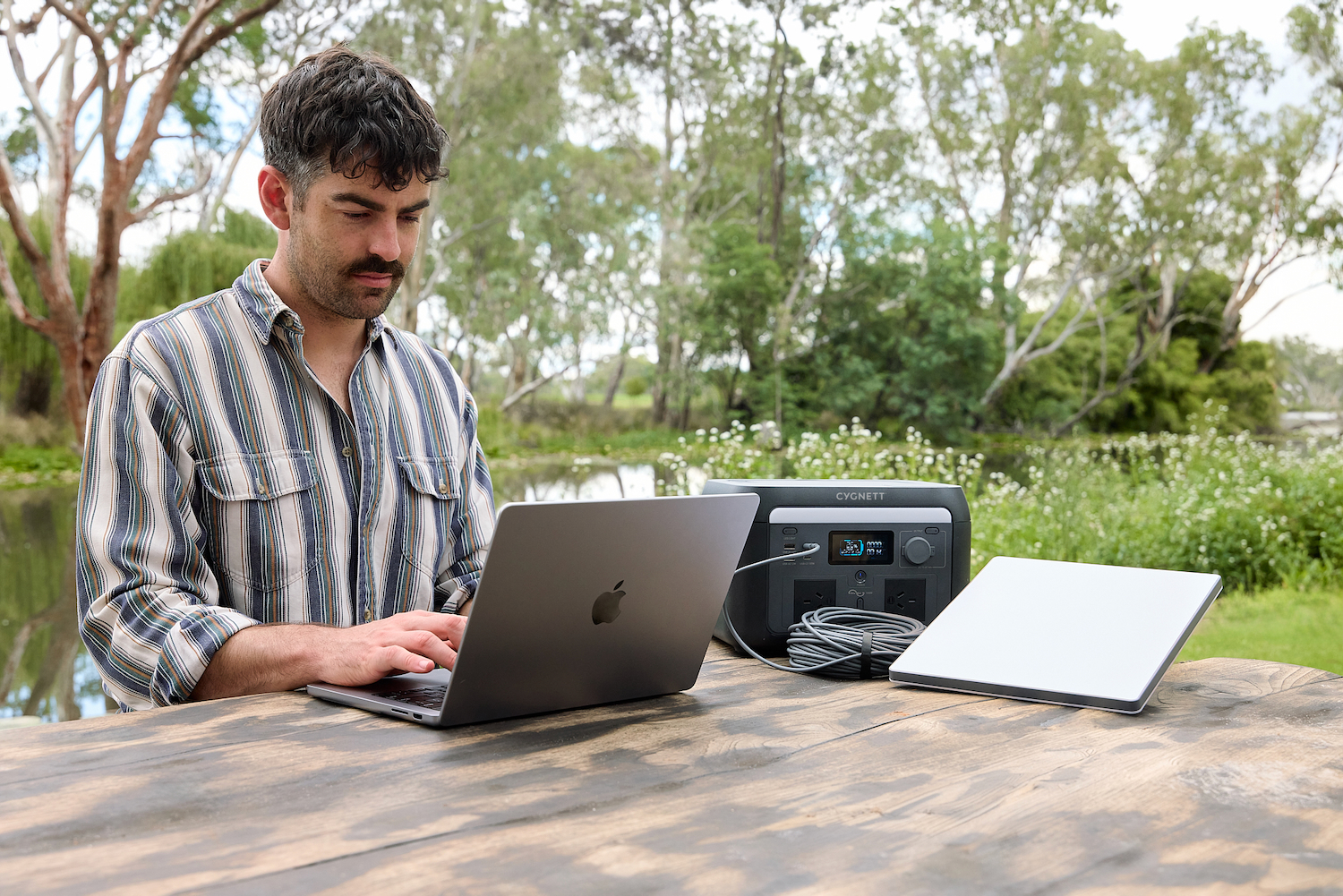
The Cygnett range uses pure sine wave inverter technology, which produces clean power that closely matches the electricity supplied by the grid.
Modified sine wave power approximates the smooth waveform of grid electricity using stepped, blocky pulses. Power adapters built for grid power run hotter and less efficiently on modified sine wave. Over time, that adds thermal stress to the adapter.
Pure sine wave output replicates that waveform precisely. Apple’s charging adapters are rated and tested against it. So when the AC output from a Portable Power Station is pure sine wave, Apple’s adapter receives exactly the power quality it was designed for.
LiFePO4, on the other hand, stands for lithium iron phosphate. It is a battery chemistry that is more thermally stable than standard lithium-ion cells, which means lower heat generation during charging and discharging.
For a Portable Power Station that spends most of the year in storage, that stability counts. Standard lithium-ion cells degrade faster when stored at partial charge and are more sensitive to heat.
Does charging with a Power Station degrade your Apple device battery?
No, charging your Apple device with a Power Station will not degrade your battery.
Apple’s Optimised Battery Charging has been active by default on iPhones since iOS 13 and on MacBooks since macOS Big Sur. This allows Apple devices to hold a charge at 80% and charge to 100% just before the device is typically unplugged. It reduces time spent at high charge states, where lithium-ion cells degrade fastest.
It doesn’t distinguish between power sources. Whether an iPhone is plugged into a wall socket at home or the USB-C port of a power station at a remote campsite, Optimised Battery Charging runs the same logic. Plug it in overnight in a cool location, and Apple’s own system handles the rest.
Plus, your Apple device does not blindly accept whatever power reaches its charging port. When an iPhone, iPad or MacBook connects via USB-C, the USB Power Delivery protocol opens a negotiation between the device and the charger. The device requests the wattage it wants. The charger responds with whatever it can supply up to its rated maximum. If a MacBook Air requests 65W and the USB-C port can deliver it, the transaction is functionally identical to a wall socket.
In simple terms, two intelligent systems are working together. Your Apple device controls the charge it receives. The power station controls the power it delivers.
What actually degrades your iPhone and MacBook battery
Apple’s support documentation lists 0°C to 35°C as the safe operating temperature range for its devices and states that battery capacity can permanently decrease above 45°C. Lithium-ion chemistry is sensitive to heat in a way it simply isn’t to clean power input.
A tent pitched in direct Australian sun on a 35-degree day can reach 60°C internally within an hour. A 4WD parked with windows up exceeds damaging temperatures faster than that. The battery health decline Apple users notice after camping trips usually traces to those conditions, not to whatever power station was in use.
If you want better long-term battery health, focus on temperature management. Keep devices away from direct sunlight while charging. Avoid charging under pillows, blankets or sleeping bags. And charge in shaded, ventilated areas whenever possible.
Choosing the right Portable Power Station for your Apple devices
Power Station capacity also affects how long you can charge your devices before needing to recharge the Power Station itself.
You should calculate the wattage your devices use and how many times you’ll need to charge them without having access to power. You might need to consider expansion batteries or solar panels to complement your Power Station to ensure you have enough capacity to last your whole trip.
A power station running well within its rated capacity also delivers more stable, consistent output than one pushed to its limit.
If you need to keep an iPhone, Apple Watch, AirPods and iPad topped up during a weekend trip, Cygnett’s 200W power station offers a compact option with USB-C outputs and a lightweight 2 kg design. It also uses LiFePO4 battery technology rated for up to 3,000 charge cycles.
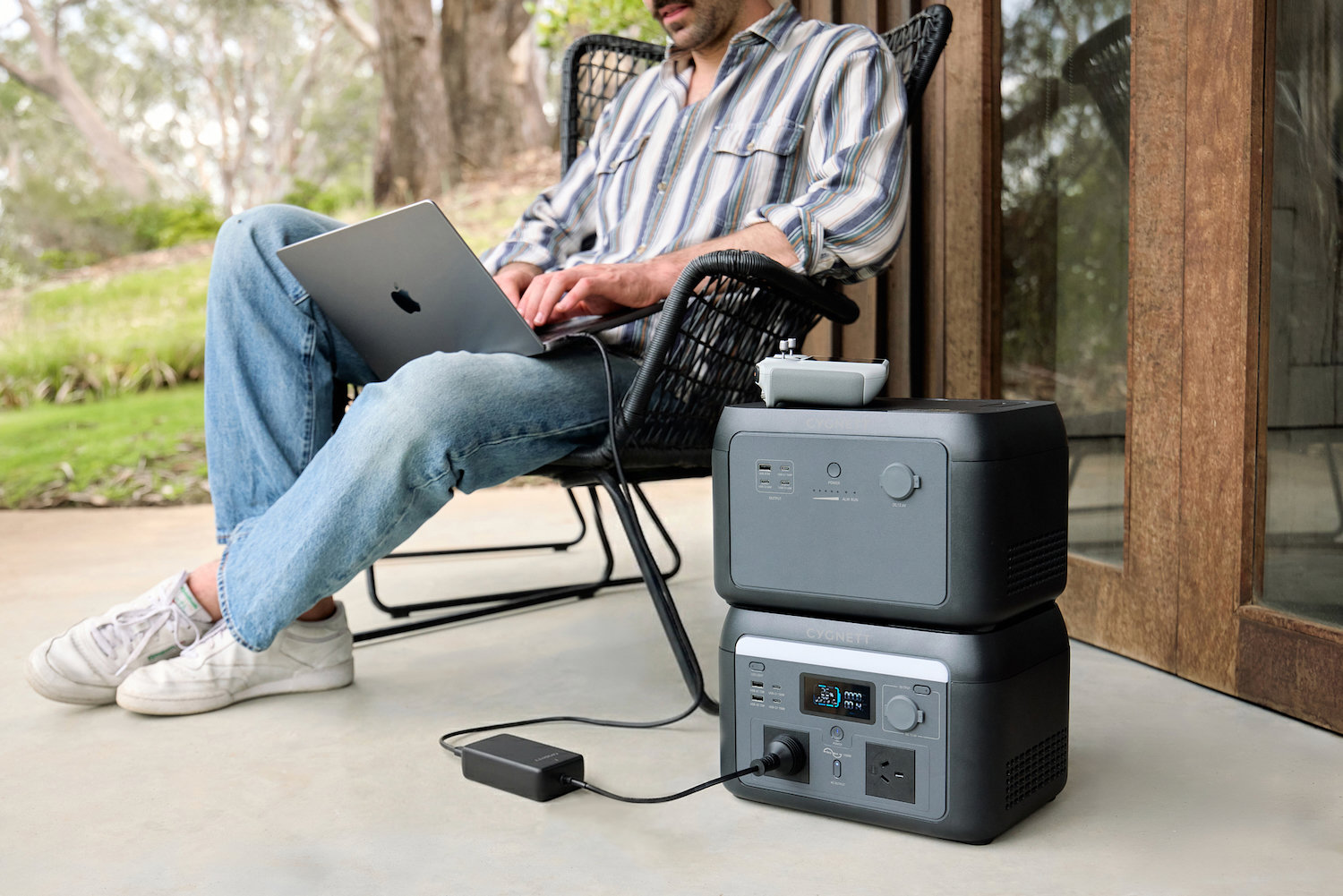
If you’re running a MacBook, portable monitor, camera gear and additional accessories and need to charge them multiple times, their 1000W power station provides significantly more capacity with 614Wh of storage, and USB-C outputs up to 100W.
For multi-day stays, add Cygnett’s 100W foldable solar panels or 614.4Wh expansion batteries to your setup. The solar panels uses MPPT technology and achieves up to 25% solar conversion efficiency to recharge the unit itself during daylight, and the 614.4Wh expansion battery effectively doubles your capacity from the 1000W Power Station.
Charge your Apple devices off-grid with confidence
Charging your Apple devices from Portable Power Stations is not harmful to battery health when you’re using a quality unit with proper power management and clean power output. If you keep your devices cool and follow safe charging practices, your battery health screen is unlikely to tell a different story than if you’d plugged into a wall socket at home.
