

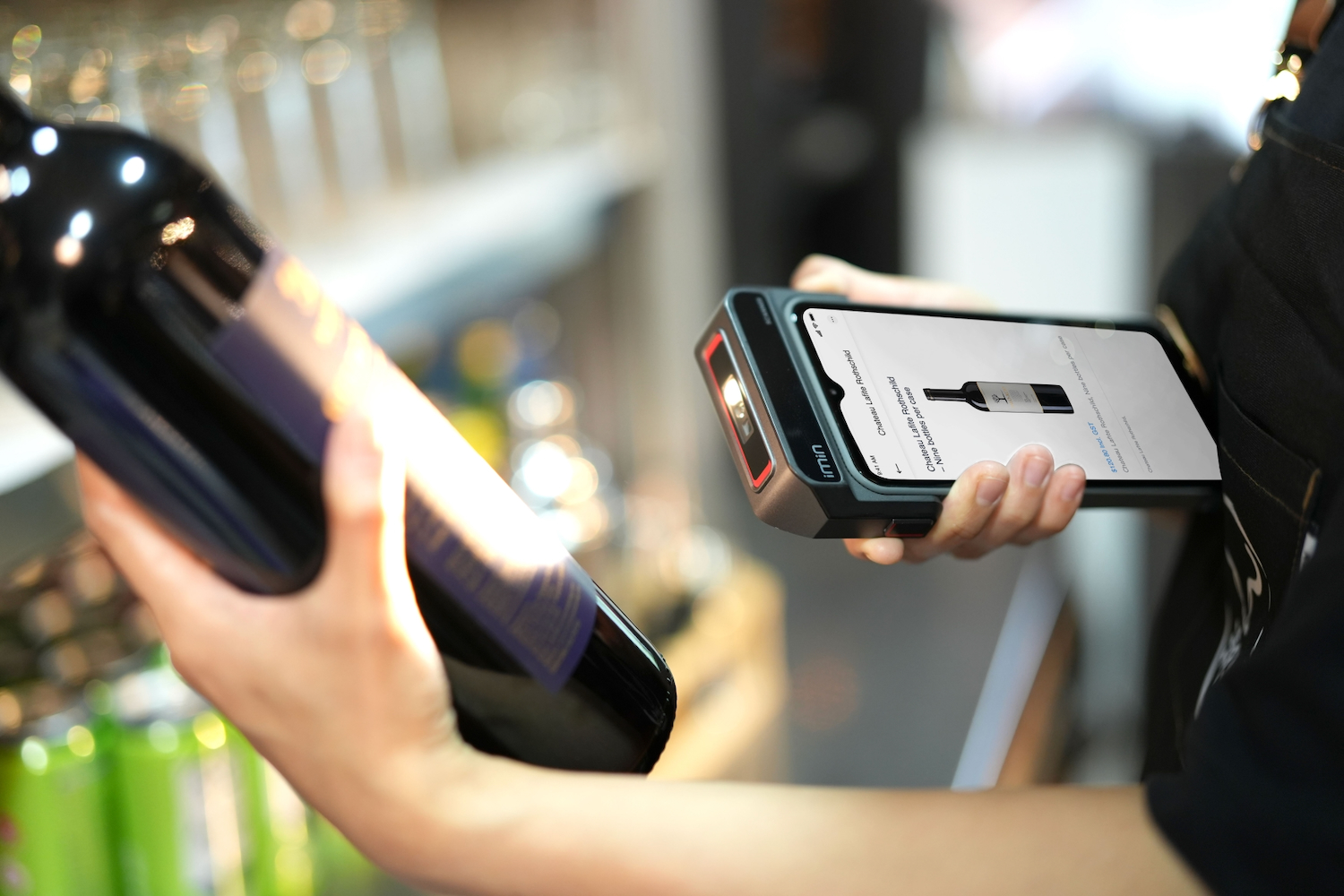


For years the bottle shop counter looked much the same: a till, a card reader, a clipboard for stocktake, and an owner who knew the regulars by name. The hardware on the bench has barely changed. What sits behind it has, and that quieter shift is reshaping how alcohol retailers run their stores from open to close.
The change lands harder in this category than in most. Liquor retailing in Australia is roughly an $18 billion industry spread across more than 2,400 businesses, according to IBISWorld, and the margins are thin enough that small operational gains decide whether an independent has a good year or a nervous one.
Layer on the compliance load, the excise maths, and a customer base that now expects to order a slab to the door, and the back office stops being something you deal with after closing.
Photo by iMin Technology on Pexels
Why Faster Checkout Is The Least Interesting Part
People envision a faster tap and a smoother screen when they think about a new point of sale. The element that is visible to you is the least important.
Every transaction turns into a data point, every product becomes a tracked record, and every supplier invoice into a self-reconciling line instead of a shoebox. This is where the actual labor takes place. The counter is just where the system surfaces. The engine room is the cloud.
This is the same pattern playing out across other industries. The shift that is transforming how Australian accounting firms operate – moving the heavy processing off a single machine and into a service you log into from anywhere – is the same one arriving at the bottle shop, just a few years later and with a lot more regulatory baggage attached.
Where The Cloud Actually Earns Its Keep
Strip away the marketing and three things change in a way that owners feel.
- The first is access. Stock, sales and staffing data live on a server you reach from your phone, so the question “how did the store do today” gets answered from the lounge room instead of the back office at 11pm.
- The second is reconciliation. Supplier pricing in this trade moves constantly, and a connected system updates cost prices, recalculates margins and surfaces the lines quietly losing money.
- The third is forecasting. With a few seasons’ worth of data, the program can tell you things like that a certain gin dies in July and that rosé peaks before a long weekend—information that a clipboard could never provide.
A typical retail till does a great job managing a café or a clothes store, but it seldom comprehends deposit policies, container return regulations, or the peculiarities of packaged alcohol taxes. Operators who want that fluency tend to evaluate a dedicated liquor POS system rather than bend a one-size-fits-all product into a shape it was never built for.
The broader point holds either way: the benefits of bringing proper IT solutions into a retail business show up as lower costs and fewer errors long before they show up as a flashier checkout.
It is a pattern well beyond this country’s borders. Coruzant Technologies has noted how cloud-based platforms reshape retail and smaller operators by turning subscription software into a substitute for the expensive on-site hardware that used to lock smaller stores out of serious analytics.
The Trade-Offs Worth Naming
None of this is free of friction. A subscription model means an ongoing cost where the old register was paid off years ago, and for a small single-site shop the sums do not always favour switching tomorrow.
Reliable broadband is assumed, which is not a given everywhere in regional Australia. And handing operational data to a third-party provider raises fair questions about security and lock-in that deserve a straight answer before you sign.
The Pressures That Make Alcohol Retail Different
Generic retail software treats a bottle of single malt like a tin of beans. It is not. Four pressures make this category its own beast, and they are the reason owners increasingly look past the off-the-shelf tills.
Age verification, licensing conditions, responsible-service rules, trading-hour limits that vary by state – none of it is optional, and a single lapse can put the licence itself at risk. A software designed for the category may lock limited sales outside of allowed hours, flag an underage prompt, and maintain an audit trail that withstands a regulatory inspection.
The Australian off-premise liquor market was worth an estimated $26.1 billion in the year to November 2025, with value sales rising even as volumes slipped. In plain terms, people are buying less but spending more on premium bottles. Riding that trend means repricing fast and often, tracking which lines actually carry margin, and not bleeding profit on stock that sits.
Inventory is enormous and unforgiving. A mid-sized store can carry several thousand SKUs across beer, wine, spirits and ready-to-drink lines, many of them seasonal, some of them genuinely valuable and worth pinching. Counting that by hand is a fantasy. Cloud inventory ties stock levels to live sales so the reorder point is a fact, not a guess.
The customer is now half online. Click-and-collect and same-day delivery are no longer a nice extra. They are table stakes, which is why the case for a mobile-first digital strategy applies as squarely to a suburban bottle shop as it does to any e-commerce brand.
What To Check Before You Switch
Plenty of owners have been burned by a migration that promised the world and delivered a fortnight of chaos. A few questions sort the serious options from the sales pitch.
- Does it run when the internet drops? A genuine cloud platform should keep processing sales offline and sync once the connection returns. A store that cannot trade during an outage is not modernised, it is exposed.
- Will it talk to what you already use? Accounting software, payment terminals, supplier ordering and any loyalty program need to connect without a manual export every night.
- Who owns the data, and can you get it out? If leaving the platform means abandoning years of sales history, you do not own a tool. You own a hostage situation.
- How steep is the learning curve for casual staff? Weekend and holiday workers turn over fast. If training takes a week, the system is fighting you.
Conclusion
Many independents have been drawn away from traditional hardware by powerful generic platforms like Square and Lightspeed, and for some establishments, they are the best option. The category-specific technologies are superior in terms of tax and compliance details, but they need you to commit to a more limited environment.
What is no longer in dispute is the direction. The clipboard era is closing, and the stores treating their data as an asset rather than a chore are the ones setting the pace. The till on the counter was never the point. What it quietly feeds, and what that lets an owner see, is where alcohol retail is genuinely being remade.
