


If you have looked at your electricity bill lately, you have probably noticed something frustrating. Australia is currently leading the world in rooftop solar uptake, with panels glistening on millions of suburban roofs from Queensland to Victoria. We are an unsuspecting renewable superpower.
However, the financial return for exporting that clean, green energy back to the grid has quietly plummeted.
Gone are the glorious days of the 44-cent feed-in tariffs that made solar a “set and forget” money printer. In 2026, we are seeing feed-in rates dip as low as 3 to 5 cents or even drop into negative territory where you pay to export during the middle of the day.
Energy retailers are practically sending a signal that they don’t want our solar power when the sun is shining because the grid is absolutely flooded with it.
Yet, the moment the sun goes down, the price we pay to buy electricity from the grid skyrockets—often hitting 35 to 50 cents per kWh during the evening peak. This massive gap between what you sell for (peanuts) and what you buy for (gold) is where your household savings are leaking away. It is a frustrating reality: You are selling wholesale and buying retail, and the margin is hurting your wallet.

The problem: You’re generating power at the wrong time
Picture this: You might be producing 5kW of glorious sunshine power at 1:00 PM on a Tuesday. But if the kids are at school and you are at work, that energy is being sent to the grid for almost nothing.
Then, at 7:00 PM, the “witching hour” begins. You are cooking dinner, the air conditioner is battling the humidity, the dishwasher is running, and the TV is on. Suddenly, your demand peaks, but your solar production is zero. You are forced to buy that power back at a premium rate.
This phenomenon is often called the “Duck Curve,” but strictly speaking, it is just a bad financial deal for homeowners. To fix it, you need a way to shift that cheap midday sun to the expensive evening peak. This is where installing a reliable solar battery becomes the game-changer for your household budget. It allows you to stop being a passive participant in the energy market and start acting as your own energy retailer, soaking up your own supply when it’s free and dispensing it when the grid is expensive.
Enter EcoFlow: A solution built for Aussie conditions
When looking for a storage solution, you need something that can handle the blistering Australian climate and adapt to your specific household needs, which can change over time. You don’t want a system that is rigid; you want one that evolves with you. EcoFlow has stepped into this space with the PowerOcean series, a system designed to be as modular and flexible as modern life requires.
The standout feature here is choice. Australian homes are diverse—some are single-phase suburban builds, others are large properties with three-phase power for workshops or heavy machinery. EcoFlow ensures there is a configuration that fits without needing to overhaul your entire electrical setup or rewire your switchboard entirely.

Flexible capacity for any home
One of the biggest barriers to storage adoption has historically been the “all or nothing” sizing. In the past, you either bought a unit that was too small to make a dent in your bill, or one that was so massive and expensive it would take twenty years to pay off. EcoFlow PowerOcean home battery solves this with 3 distinct tiers:
EcoFlow PowerOcean (1-Phase)
- Best for: Smaller households or standard suburban homes.
- Modular design: Features a stackable battery system that grows with your needs, delivering up to 6kW of continuous backup power.
- Starting capacity: You can start with a 5kWh battery pack, which is perfect for covering essentials like lighting, refrigeration, and entertainment.
- Expandability: As your energy consumption grows, you can connect up to three battery packs to a single inverter for a total of 15kWh—without replacing the original unit.
Note: For massive energy needs, connect multiple units for a total of up to 45kWh.
EcoFlow PowerOcean (3-Phase)
- Best for: Larger homes, businesses, or properties with high energy demands.
- High power output: Delivers a robust output with 10kW of continuous output and up to 12kW peak power (for 60 seconds), capable of running heavy-duty appliances simultaneously.
- Massive storage potential: Can be stacked to provide up to 45kWh of storage capacity.
- Energy independence: This level of capacity is sufficient to run a large household almost entirely off-grid for significant periods, offering protection against price hikes and blackouts.
EcoFlow PowerOcean Plus (3-Phase)
- Best for: Large luxury estates, commercial properties, or homes with complex roof structures.
- Unmatched Power: A massive 29.9kW AC output ensures you can run your entire home—including ducted air conditioning, pool pumps, and EV chargers—completely off solar without relying on the grid.
- Ultimate Storage: Expandable up to 60kWh, providing extended autonomy for days of off-grid living.
- Solar Beast: Supports up to 40kW of solar input, allowing you to maximize generation from every inch of roof space.
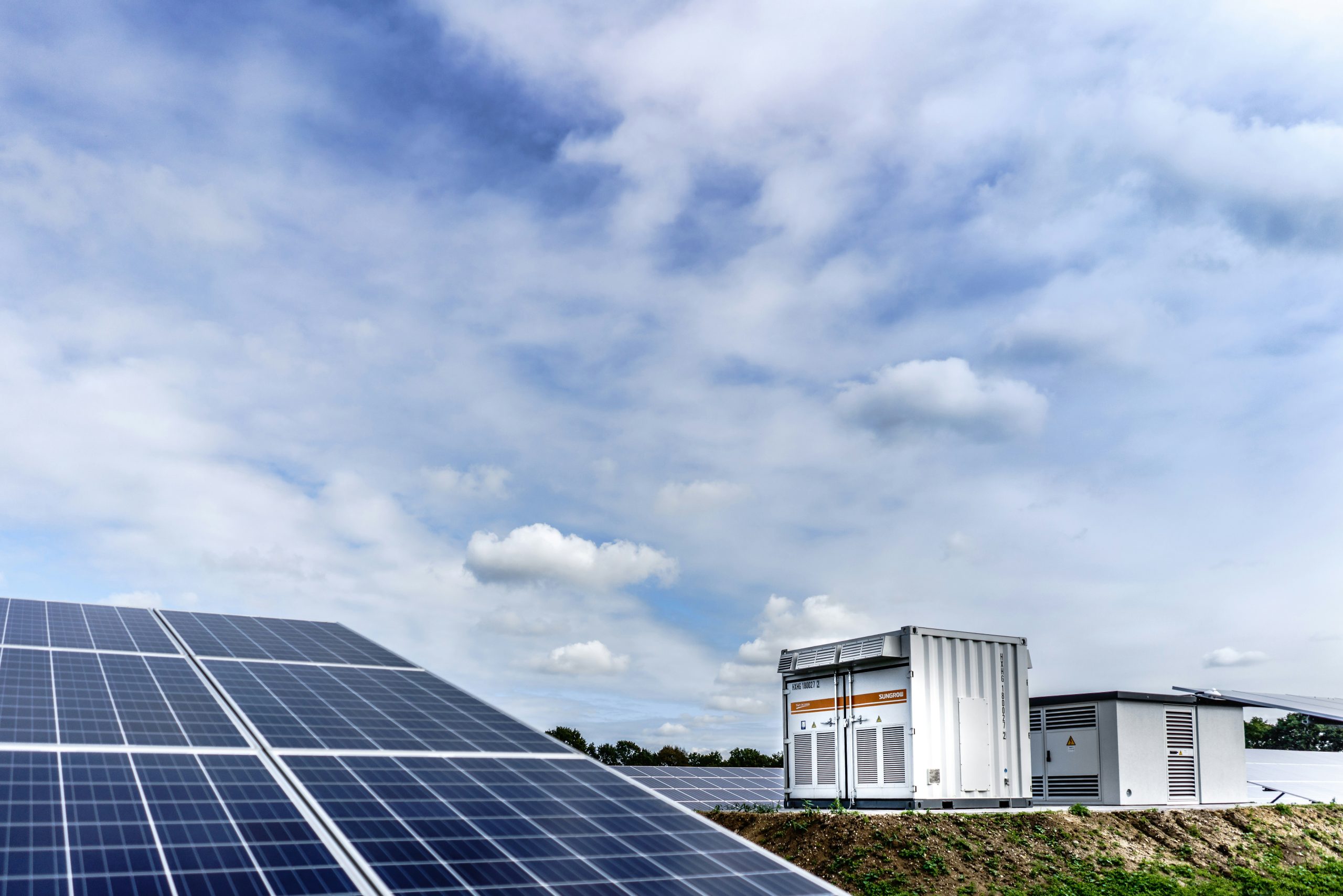
Safety first: Why chemistry matters
In the Australian heat, battery safety is non-negotiable. We all know how hot our garages or exterior walls can get in a scorching January heatwave. Not all lithium cells are up to the task, and picking the wrong chemistry can be a risk. The EcoFlow PowerOcean series uses Lithium Iron Phosphate (LFP) chemistry. It utilizes 800V high-voltage architecture for superior efficiency and safety.
This is a critical distinction. Unlike the older NMC (Nickel Manganese Cobalt) batteries found in some mobile phones and early electric vehicles, LFP batteries are incredibly stable. They have a much higher thermal runaway temperature, meaning they are far less likely to overheat. They are safer, longer-lasting (offering thousands more cycles), and they don’t rely on conflict minerals like cobalt.
EcoFlow takes this a step further with an integrated active aerosol fire protection module. It’s the kind of “belt and braces” safety feature that gives you total peace of mind when the unit is installed in your home. Furthermore, the system boasts an IP65 rating, meaning it is weather, dust, and shock-resistant (tested to withstand 40,000 N of pressure.). Whether it’s dust from the outback or a coastal storm, the unit is built to survive.
Building a complete home energy ecosystem
Hardware is only half the battle. In 2026, the real magic happens when your devices talk to each other. The old way of doing things was fragmented—solar on the roof, a dumb charger in the garage, and a separate app for the air con. EcoFlow has replaced this with a unified Home Energy Ecosystem.
This is an all-in-one solution that integrates your solar power, battery storage, EV charging, smart heating, and other devices into one seamless platform. It is not just about keeping the lights on; it is about total control.
- The brain of the operation: At the center is the EcoFlow Intelligent HEMS (Home Energy Management System). It intelligently monitors and controls your system to optimise energy efficiency. By utilizing Dynamic Tariff Integration, it can automatically schedule appliance and battery charging during off-peak hours—and discharge when rates are high—to slash your electricity bills.
- Seamless smart home experience: The ecosystem is designed for effortless connectivity using the Matterprotocol. This ensures compatibility and security, allowing your system to communicate with smart lights, plugs, outlets, thermostats, and HVAC controllers to automate your energy usage.
- Maximise your solar power smartly: It allows you to harness more of your free solar power exactly where it is needed most. You can direct excess energy for EV charging, hot water heating, and efficient home heating and cooling, ensuring you use every drop of energy you generate to reduce your carbon footprint.
- Intuitive user experience: Whether you use the EcoFlow App, the Web Portal, or the sleek PowerInsight 2touch screen, you get a single, intuitive dashboard. You can personalise your interface with movable widgets to track your savings, monitor your backup reserve, and manage your entire energy world from one place.
The verdict: Become a “Solar Sponge” and take back control
In 2026, the strategy for Australian energy has shifted. For years, we treated our solar panels like hoses, spraying cheap energy into the grid only to buy it back at a premium. It was a leaky system that served the retailers, not the homeowners.
The “Solar Sponge” effect is the fix. By installing a system like the EcoFlow PowerOcean, you finally have the capacity to soak up that abundant midday sunshine and squeeze it out exactly when you need it most—during the expensive evening peak.
Financial savings will always be the hook, but the true value of the EcoFlow ecosystem is resilience. It is the peace of mind knowing that your home is actively monitoring the weather, prioritizing your EV charging, and keeping the lights on when the suburb goes dark.
The math has tipped, the technology is ready, and the message is clear: Stop letting your power drain away. Soak it up, store it, and take control of your future.
