

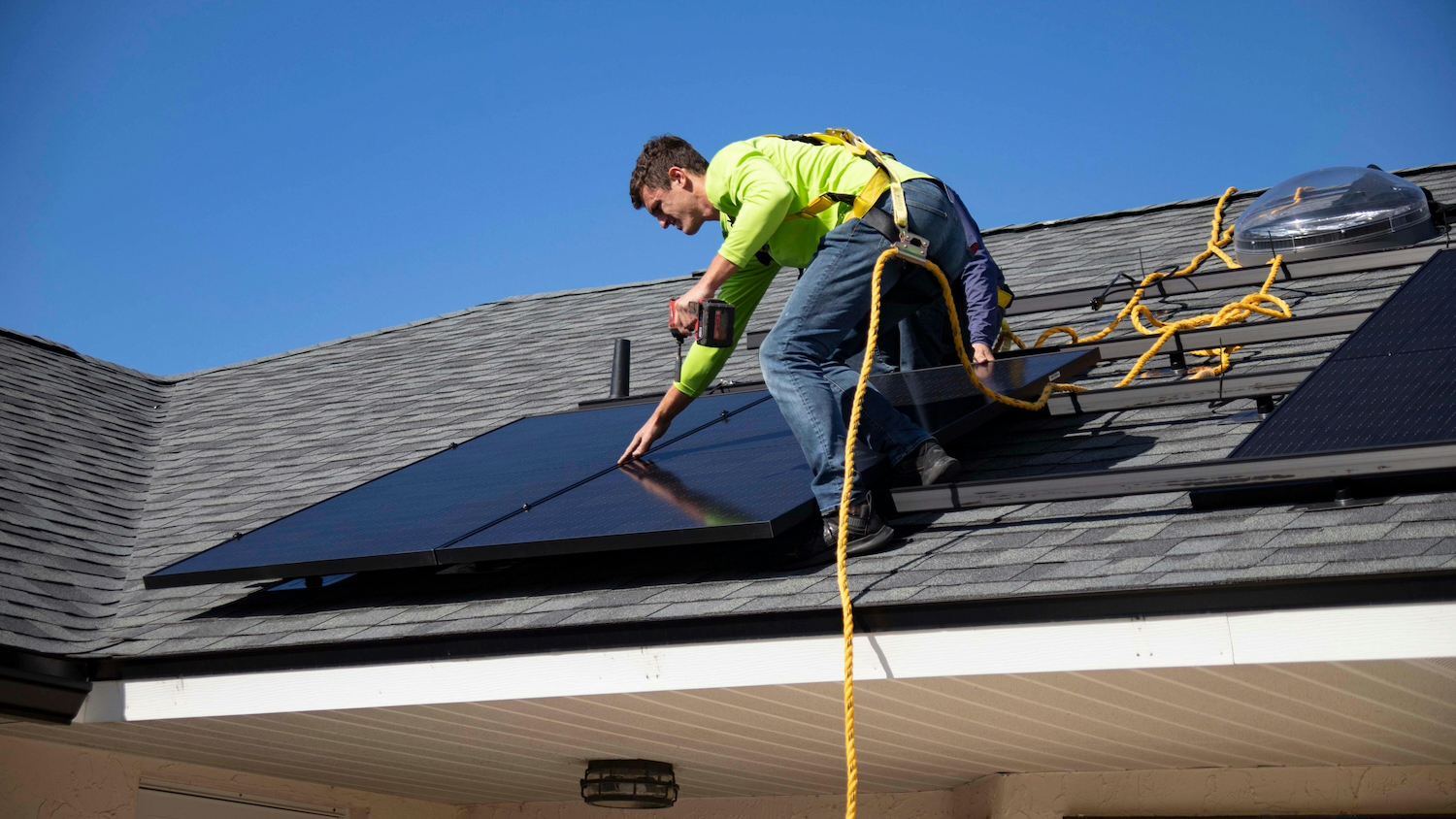


When you look at a modern Australian roof, you are no longer just looking at passive sheets of glass and silicon. You are looking at a highly advanced, interconnected smart energy ecosystem that acts as a decentralised power plant.
The scale of this technological shift is staggering. As of mid-2026, over 4.4 million solar power systems have been installed across the country, meaning roughly 40% of all Australian households are now generating their own power. We have also seen a massive pivot toward energy storage, with over 400,000 new home batteries installed in 2025 alone. Today’s residential setups feature bi-directional EV charging, AI-driven weather forecasting, and real-time app monitoring capable of isolating your home from the grid in milliseconds during a blackout.
But while we love to obsess over the final product—like the satisfying feeling of controlling our home’s power grid from an iPhone—we rarely think about how these massive pieces of advanced technology actually make it from global mega-factories onto our roofs.
The journey of renewable energy tech is a fascinating logistical feat. It is a story of global robotics, strict environmental engineering, and highly efficient digital supply chains. Here is a behind-the-scenes look at the high-tech journey powering Australia’s clean energy boom.
1. The Global Assembly Line: Building Tier 1 Tech
The journey of your home battery or solar array begins in state-of-the-art manufacturing hubs, primarily across Asia and the United States, where “Tier 1” manufacturers operate. If you are picturing a dusty warehouse with conveyor belts, think again. These facilities resemble the cleanrooms used to manufacture microchips.
The production of modern solar cells requires extreme precision. Silicon ingots are sliced into wafers that are mere fractions of a millimeter thick. These wafers are then chemically treated to create the electrical fields necessary to convert sunlight into direct current (DC). Robotic arms assemble these delicate monocrystalline silicon cells into heavy-duty panels, sandwiching them between tempered glass and protective backsheets with millimetre precision to ensure completely watertight seals.
However, the panels are just the raw generators. The true technological marvel lies in the hardware that controls them. Engineers constantly load new firmware into the “brains” of the system: the smart inverters and battery management systems (BMS). Brands like Tesla, Anker, and Trina Solar are pushing the boundaries of what these units can do. They are transforming them from simple power converters into intelligent home energy hubs. Inside a modern battery, the BMS continuously monitors the temperature, voltage, and health of individual lithium-ion cells, automatically balancing the load to extend the lifespan of the unit for over a decade.
2. The Technological Gatekeepers: Distribution and Vetting
Once the hardware is manufactured, it faces its biggest hurdle: surviving the Australian market. Australia has some of the strictest electrical and environmental safety standards in the world, and for good reason.
Our climate is notoriously unforgiving. A battery system that works beautifully in a mild European or North American climate might succumb to thermal throttling under the intense heat of a Perth summer. Similarly, coastal homes from Sydney to the Gold Coast face relentless salt-mist exposure, which can quickly corrode inferior metal casings and degrade wiring. Equipment must be rigorously tested against cyclical heat, extreme UV radiation, and severe weather events.
This is where the invisible, yet critical, backbone of the industry steps in. Local electricians and solar installers simply do not have the time or resources to negotiate with global factory representatives, manage international freight logistics, or test every new firmware update for grid compliance.
Instead, they rely on a specialised solar wholesaler to act as a technological gatekeeper. These B2B distributors do the heavy lifting of importing, vetting, and securely storing the equipment. Before a new brand or product line is made available to local tradies, the distributor ensures that the panels, smart batteries, and inverters entering the country are fully compliant with local network standards. They bridge the gap between global tech giants and local installers, ensuring that only the safest, most reliable technology makes it into Australian homes.
3. The Digital Warehouse: Smarter Procurement and Logistics
The supply chain itself has undergone a massive digital transformation. The solar industry is moving too fast for traditional paper trails and manual inventory checks. Gone are the days of tradies calling a warehouse to ask what is in stock while a homeowner waits weeks for an answer.
Modern solar distribution is managed via sophisticated e-commerce portals, real-time inventory systems, and predictive algorithms. The procurement process is now entirely digital. When a local installer visits your home to design a custom solar array, they often use drone mapping to assess roof space and shading. From their tablet, they can instantly connect to their distributor’s digital portal, check live stock levels for the exact smart inverter and battery modules required for your specific design, and reserve the hardware immediately.
This API-driven logistics model allows for “just-in-time” fulfillment. The heavy, bulky equipment is dispatched from regional distribution centers directly to the job site precisely when it is needed. This digital streamlining is what allows installation wait times to drop from several months to mere days, keeping the momentum of the solar boom moving forward without bottlenecks.
4. The Final Mile: Software, Commissioning, and The Smart Home
The final leg of the technological journey belongs to your local certified installer. Because the B2B distributor has already ensured the hardware is compatible, tier 1 quality, and grid-compliant, the installer can focus entirely on the complex technical integration.
Installing a modern system is no longer just about running cables; it is about networking a smart home. The installer mounts the heavy hardware, wires the system into your home’s main electrical board, and connects the smart inverter to your local Wi-Fi network.
The commissioning phase is entirely software-driven. The system runs self-diagnostics and syncs with the local energy grid. Once everything is green-lit, control is handed over to you via a consumer app. From that moment on, you are in the driver’s seat. You can watch real-time animations of electricity flowing from your roof to your appliances, tell your battery to charge from the grid when energy prices are cheap, or reserve emergency backup power if a storm is approaching.
Furthermore, this final step connects your home to a wider Virtual Power Plant (VPP). By networking thousands of these high-tech batteries together via the cloud, energy retailers can draw on household power to stabilise the national grid during peak demand, paying you for the privilege.
The Verdict
The next time you open an app on your phone to check how much clean energy your roof is generating, take a moment to appreciate the incredible logistical and technological pipeline behind it. The Australian solar boom is not just being driven by consumer demand and environmental awareness. It is being actively powered by a highly efficient, behind-the-scenes supply chain that vets, manages, and distributes the world’s best energy technology, ensuring it makes it safely from the factory floor straight into the palm of your hand.
