




Bedding is undergoing a technological revolution. Although fitness trackers and smartwatches have taken over the decades-old wellness technology market, the creators have recently shifted their focus to the place we spend about a third of our time in, our beds.
The sleep tech market is changing the way people rest, recover, and recharge with temperature-controlling fabrics, AI-assisted mattresses, and more.
Let’s look at the most recent advances in sleep technology and how they’re changing the way we think about nighttime comfort and sleep quality.
Understanding Modern Bedding Technology and Sleep Interaction
We should first explore the many possibilities and understand why sleep technology is so important to use in contemporary bedding especially bed sheets before examining the details.
How Technology Affects Sleep Quality
In conventional surfaces, bedding only serves a comfort and warming purpose. That is why advanced sleep tech responds to the needs of your body and emphasises personal comfort zones during the night.
When sleep technology is combined with bedding (the use of sensors and changeable materials), your sleep quality seems much better. Research indicates that U.S. citizens lose about 1,200 sleep hours annually because of sleep that is of poor quality, and therefore, such technological products are becoming more helpful.
Performance and Material Innovation
There are different materials that can be used to influence your sleep quality; this is what determines how comfortable and practical your sleep will be:
- Phase-Change Fabrics: These are smart materials that are used to control temperature when the sleeper undergoes the natural body temperature fluctuations during the night.
- Smart Textiles: Smart bedding is highly responsive, and it is full of sensors. This implies that the surface is smart and is monitoring the needs and adjusting to them.
- Antimicrobial Treatments: These materials demonstrate the advantages of silver ions and copper threading, which create a healthier sleeping environment when correctly incorporated.
A study has shown that the optimum body temperature for sleep is between 60 degrees and 67 degrees F (15-19 degrees C), which indicates that body temperature is key to good sleep.
Selecting Systems for Various Sleep Requirements
Now that we are aware of how we can go about these innovations, we would like to address the question of how to choose the right technology to make personalised sleep optimisation.
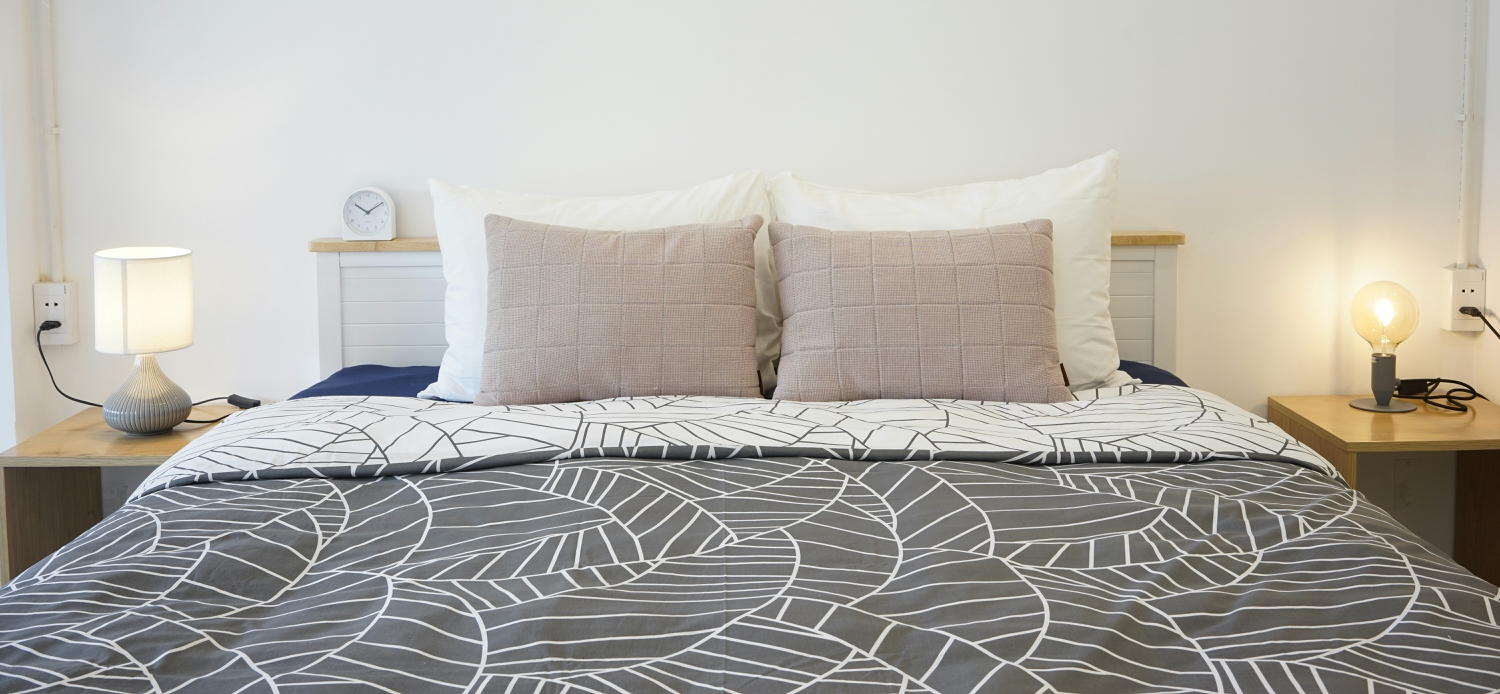
Smart Mattress Features and Choices
The mattress technology is essential when you are having certain sleep problems. Failure in this part, and you will have disturbed sleep or wasted money on features you do not need.
Artificial intelligence-based systems are superb at memorising your behaviour and adapting the firmness automatically. They also give comfort that is customised, which includes various body shapes as well as sleeping postures in various areas.
The dual-zone mattresses are applicable to couples with different tastes. They offer adjustability in a wider scope, which rules out the possibility of a trade-off. The essence of this distribution still allows the comfort requirements of the maximum number of sleepers to be met.
Smart mattresses are tracking sleep metrics using integrated sensors to revolutionise the way. These are continually gathering systems that are planned in such a way that there is more information about the sleep phases and minimal speculation on how to progress.
Environmental Systems and Temperature Control
Different contents and systems need various schemes to achieve the best conditions:
- Temperature-Regulating Bedding: Basic climate control only requires a medium investment in most cases. The inherent adjustment capabilities of the phase-change materials mean that the materials automatically respond to body temperature changes. Improved dual-zone systems can offer autonomous temperature controls that render the dissimilar inclinations of couples compatible.
- Integrated Climate Systems: These are more costly to install. Smart bedroom environments typically require integrated thermostats and ventilation to become fully optimised because of the holistic nature of their implementation.
- Wake-Up Light Systems: They are between simple and sophisticated systems. You should also regulate the strength of your lights to ensure that you do not produce shocking wake-up effects. Too much brightness, too fast and those simulations of the sunrise are unnatural and disruptive.
Placement Strategies and System Integration
Proper placement and connection depend on whether you get the optimum results with your sleep tech.
Installation and Positioning
Install the mattress base to make sure that the sensors are connected and the app is synchronised. Choose environment positions that are both accessible and pleasing to the bedroom. Control interfaces and placement of charging stations are adjustable to user-customise control interfaces.
Connection to Devices and Ecology
Fragmentation is avoided through consistent integration across devices. The trick lies in the fact that the systems talk to each other. You desire intelligent mattresses, air conditioning, and lights to automate their communication without human intervention.
Customisation and App Control
The efficiency of this improvement in the quality of sleep is achieved by adjusting the settings of your systems. Personalise based on what you are attempting to accomplish. The more information you monitor, the more insights you get, as well as specific sleep changes.
Use routines for bedtime and wake-up schedules lest there is inconsistency. Nobody will want to face disturbed circadian rhythms due to the abnormal sleep-wake cycle.
Conclusion
The use of sleep technology in bedding should be carefully chosen and combined rather than simply purchasing the new devices and expecting to get more sleep. The optimisation of sleep demands a number of considerations.
You require customised technology that would meet your own sleep-related problems. You are also to decide the appropriate integration method according to what you already have in your bedroom setup.
Nevertheless, the most vital bit of advice when a person wants to upgrade bedding using sleeping technology is to research first and consider compatibility information before buying.
