

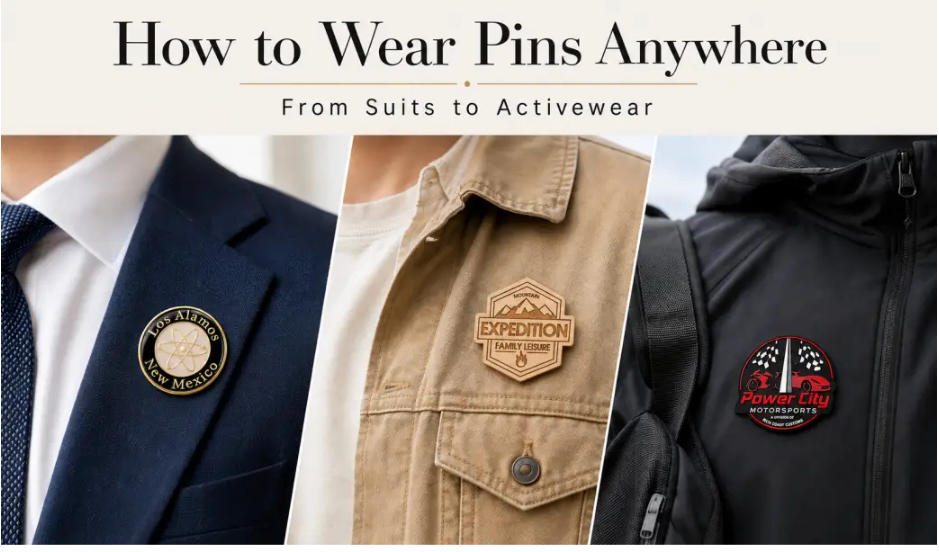


At developer conferences, hackathons, and global tech summits, custom enamel pins serve as tangible social currency. Attendees collect and trade them across exhibitor booths, wear them on conference lanyards, and display them on laptop sleeves and backpacks long after closing remarks. Designing an effective pin requires balancing visual branding with material durability, volume economics, and event logistics.
Hard Enamel vs. Soft Enamel: Matching Finishes to Event Formats
How your audience engages with your merch comes down to how hard‑enamel and soft‑enamel pins look and feel. You’ll want to pick the proper finish based on your event level and how you plan to hand out the items.
Hard Enamel: Polished Credentials for VIPs and Speakers
Hard enamel pins are baked and polished several times during production. This process brings the enamel and metal edges to the same level, leaving a smooth, shiny surface. The finish is durable enough for pins that are handled often or worn regularly at events.
- Best For: Keynote speakers, VIP sponsors, hackathon judges, and executive summit attendees who want a keepsake from the event.
- Aesthetic Pairing: Polished silver works well with the clean, modern look of software and cloud technology brands. Gold plating or matte black nickel may be a better fit for established tech companies or executive-level events.
Soft Enamel: Dimensional Detailing for Community and Swag Bags
Soft enamel pins have raised metal lines with color filled in between them. You can feel the difference when you run your finger over the surface. They work well for logos, mascots, and pixel-style designs.
- Best For: DevCon swag bags, booth activities such as scan-and-collect pin challenges, gifts for community contributors, and open-source project merchandise.
Design Tip (Format & Sizing): If attendees will be collecting or trading pins at different booths, 0.75-inch mini pins are worth considering. Their smaller size makes them easier to carry on a lanyard, especially when people collect designs from multiple sponsors. This size works with both hard and soft enamel.
Enamel Specification & Decision Matrix
| Dimension | Hard Enamel (Cloisonné Style) | Soft Enamel (Die-Struck Relief) |
| Surface Profile | Flush, flat, mirror-polished plane | Recessed paint fills with raised metal borders |
| Tactile Texture | Glass-smooth, jewelry-grade glide | Dimensional, textured 3D relief |
| Durability Grade | High; highly resistant to abrasion and daily friction | Moderate; raised metal protects paint, but enamel can scuff |
| Fine Line Tolerance | Moderate (≥ 0.3 mm); lines can widen during polishing | High (≥ 0.15 mm); raised ridges hold crisp micro-details |
| Cost Baseline | 15% to 25% premium due to multi-stage polishing | Cost-effective baseline for mass distribution |
| Primary Tech Use | Speaker honors, VIP credentials, executive summits | DevCon swag bags, booth trading quests, contributor drops |
Sustainable Swag: Aligning Materials with ESG Tech Summits
Companies are paying more attention to the materials used in event giveaways as ESG becomes a bigger part of IT reporting. Brass and zinc are still widely used for pins, but events related to clean energy or climate technology may need other options with a smaller environmental footprint. Organizers may also need documents to back up those claims.
- Recycled Metal (Brass/Zinc): Recycled brass and zinc can achieve the same fine details and polished finish as newly mined metals, with less reliance on virgin resources. They’re a good choice for tech companies that want to use more recycled materials without compromising the look of their pins.
- FSC-Certified Wood (Walnut, Cherry, or Maple): Wood pins have a look and feel that’s quite different from metal pins. Each piece has its own grain, and logos or text can be added through laser engraving. They may suit open-source meetups, cybersecurity events, and smaller tech conferences looking for a simple alternative to traditional enamel pins.
- Bamboo: Lightweight and fast-growing, bamboo gives pins a simple, modern appearance. Its natural texture pairs well with geometric logos and minimalist tech branding.
Evaluating Environmental Claims: A material labeled “eco-friendly” isn’t necessarily the better choice in every situation. For example, untreated wood or poorly finished bamboo may wear out quickly when attached to bags used every day, leading to more frequent replacements. Before ordering, check for credible third-party sourcing certifications and ask suppliers whether their coatings, adhesives, and other finishes are lead-free and non-toxic.
Tiered Pricing and Production Economics
When ordering custom pins, you may need to pay for the mold first, then pay for each pin. Ask the supplier to break down both costs before ordering so you know what you’ll actually spend.
- Tooling and Mold Costs: Each new pin design usually needs its own steel mold, and the setup fee generally stays the same whether you order 100 or 5,000 pieces. For events with different attendee groups, you can reuse one design and change the enamel colors for each group—for example, black and gold for speakers and blue and white for attendees. This helps avoid paying for multiple molds.
- Order Quantity and Leftovers: Ordering more pins can bring down the price per piece, but that doesn’t mean a bigger order is always the better deal. Check the number of people registered before deciding how many to buy. It’s also worth asking suppliers about price differences at 100, 300, 500, 1,000, and 2,500 pieces. Adding 10%–15% to your estimated attendance should leave a few spares without going too far over budget.
- Finishes and Material Costs: Hard enamel pins generally cost 15%–25% more than soft enamel because of the extra polishing involved. Wooden pins and those made with certified recycled metals may also come at a higher price. This is especially noticeable with small orders, where material and production costs are divided among fewer pieces.
Production Timelines, Proofing, and Supplier Sourcing
Managing technical production requires disciplined milestone planning well before event week.
Brand Color Precision & Proofing
- Pantone Color Matching: Colors can look different on a computer screen than they do on a finished enamel pin. To get a closer match to your brand colors, provide vector artwork in AI or EPS format with the correct Pantone (PMS) codes specified.
- Digital Proofs vs. Physical Samples: A digital proof gives you a chance to review the design before production starts, including the metal lines, enamel colors, and cutout shapes. For most orders, this is enough to catch design issues. If you’re ordering more than 2,500 pins or using an unfamiliar eco-friendly material, ask for a physical sample so you can see the finish and quality for yourself.
Lead Times and Event Deadlines
Custom metal pins can take around 2–4 weeks to make, with shipping time added on top. Getting a physical sample first may add another 7–10 business days. To avoid last-minute problems, try to have everything delivered at least 10 business days before the event, especially if the order is coming from overseas.
Supplier Quote Checklist
Choosing a supplier comes down to order size, delivery location, and how quickly you need the pins.
- Bulk Orders: For businesses ordering large quantities, suppliers like GS-JJ offer different styles of custom enamel pins and custom lapel pins to help keep branding consistent across an order.
- Australia and New Zealand: If your event is taking place in Australia, New Zealand, or elsewhere in Oceania, a local manufacturer may be a practical choice for shorter shipping times and fewer cross-border delays. You can start by comparing options in this guide to the Top 6 Custom Pin Manufacturers in Australia.
Some conference pins are handed out as branded gifts, while others are made for attendees to take home and collect. Hard enamel has a flat, polished surface, whereas soft enamel leaves the metal edges standing above the colored sections. Either finish can suit an event logo or mascot, depending on the artwork. For organizers who want something different from standard metal pins, recycled materials or wood are also options. The right choice depends on how the pins will be used, who they’re intended for, and what the event budget allows.
