



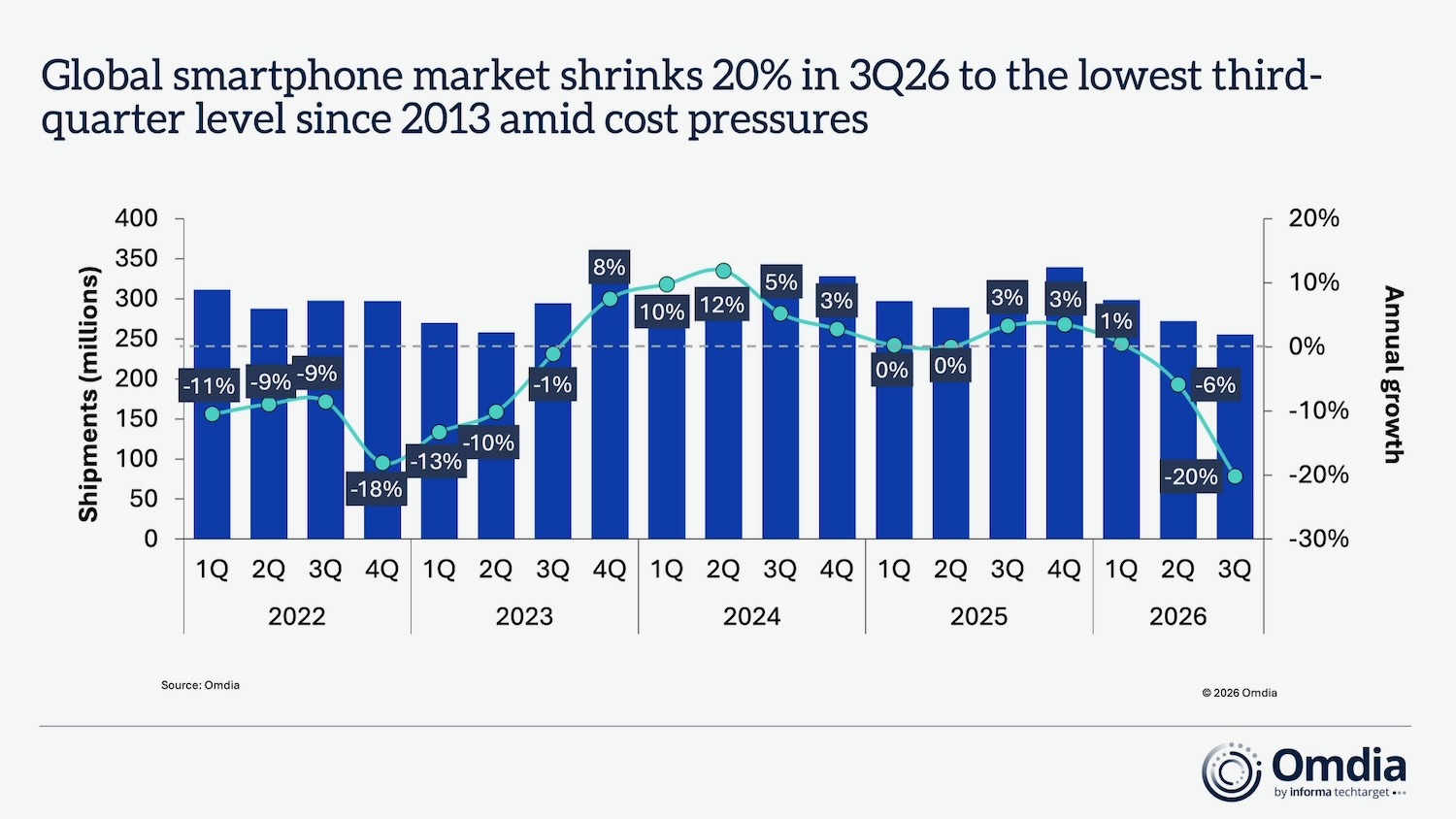
Global smartphone shipments have slumped by 20 per cent year on year in Q3 2026 despite new flagship launches from Samsung and Apple.
Figures released by Omdia showed the decline in shipments can be attributed to the memory and storage cost pressures which prevented price flexibility and spurred vendors to scale back shipments of cheaper products.
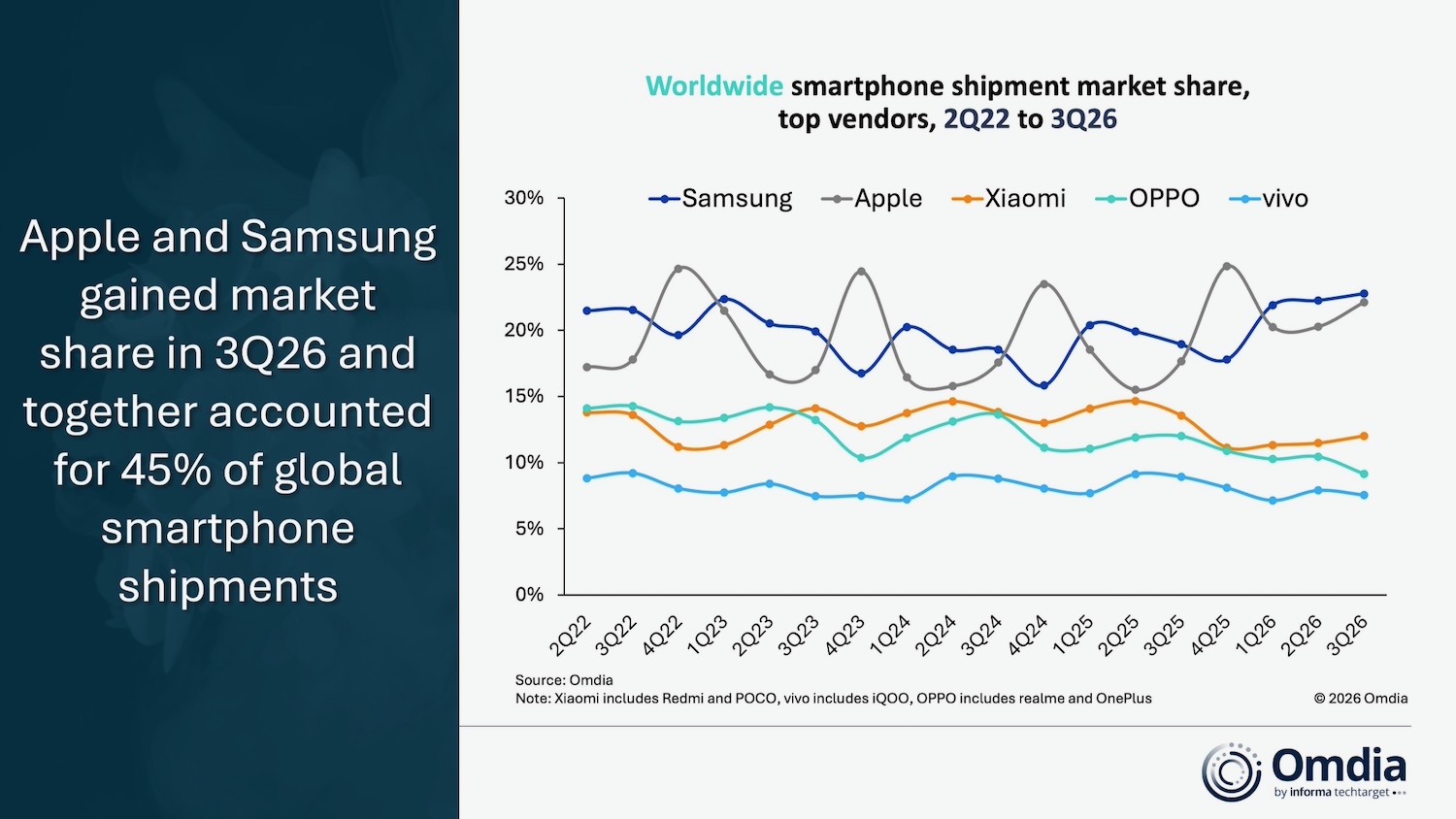
This downturn made the landscape even more competitive with Samsung and Apple together accounting for 45 per cent of global shipments, up 8 per cent from a year earlier.
Samsung maintained its position as the number one global manufacturer with a 23 per cent market share (up from 19 per cent a year ago) which is an increase for the brand despite the year-on-year decline in shipments.
The August launch of the Galaxy Z Fold8 and Flip8 series helped shore up Samsung’s position the premium smartphone space.
Apple ranked second with a 22 per cent market share (up from 18 per cent last year) and maintained a consistent market position despite the wider downturn.
This was helped by strong demand for the iPhone 17 and maintained its momentum with the September introduction of the iPhone 18 Pro and iPhone 18 Pro Max.
And with the upcoming release of the iPhone Duo, Apple’s first foldable iPhone, the company is in a good position to expand its customer footprint with this new form factor.
The figures show that AI is still not yet a major purchase driver for customers but Apple Intelligence may play a role in differentiating the Apple experience and sustaining its ecosystem long term.
Xiaomi maintained its third position with a 12 per cent market share, followed closely by OPPO at 9 per cent, with Vivo completing the top five at 8 per cent.
Rising memory costs are affecting companies across the category, forcing companies to prioritise Average Selling Price (ASP) growth to sustain the value of their shipments and safeguard their profitability.
“Rising component costs and differing vendor responses are reshaping the competitive landscape, but market share alone does not tell the full story,” said Hayden Hou, Principal Analyst at Omdia.
“As vendors make different trade-offs between shipment scale, revenue and profitability, their performance needs to be assessed beyond unit shipments. More importantly, the strategic decisions made during this downturn could have lasting implications beyond the current cost cycle.
“Investments in new channel partnerships, device financing capabilities and stronger premium portfolios will help determine which vendors emerge with a more competitive and sustainable business model once cost pressures ease.”
Lucas Zhong, Senior Analyst at Omdia said: “For vendors competing primarily on affordability, protecting profitability without sacrificing shipment scale has become an increasingly difficult balancing act.
“This pressure is particularly acute in emerging markets, where consumers are more price-sensitive and vendors rely heavily on entry-level devices with already thin profit margins.
“However, scaling back shipments to protect margins carries long-term risks, particularly for emerging vendors, as losing market presence can weaken brand visibility and channel mindshare, which may take years to rebuild.
“Rather than withdrawing across the board, vendors need to make more deliberate choices about where to compete, concentrating resources on markets and products that can sustain both profitability and market relevance.”
| Worldwide smartphone market share split Omdia Preliminary Smartphone Market Pulse: 3Q26 |
|||
| Vendor | 3Q26
market share |
3Q25
market share |
|
| Samsung | 23% | 19% | |
| Apple | 22% | 18% | |
| Xiaomi | 12% | 14% | |
| OPPO | 9% | 12% | |
| vivo | 8% | 9% | |
| Others | 27% | 29% | |
