

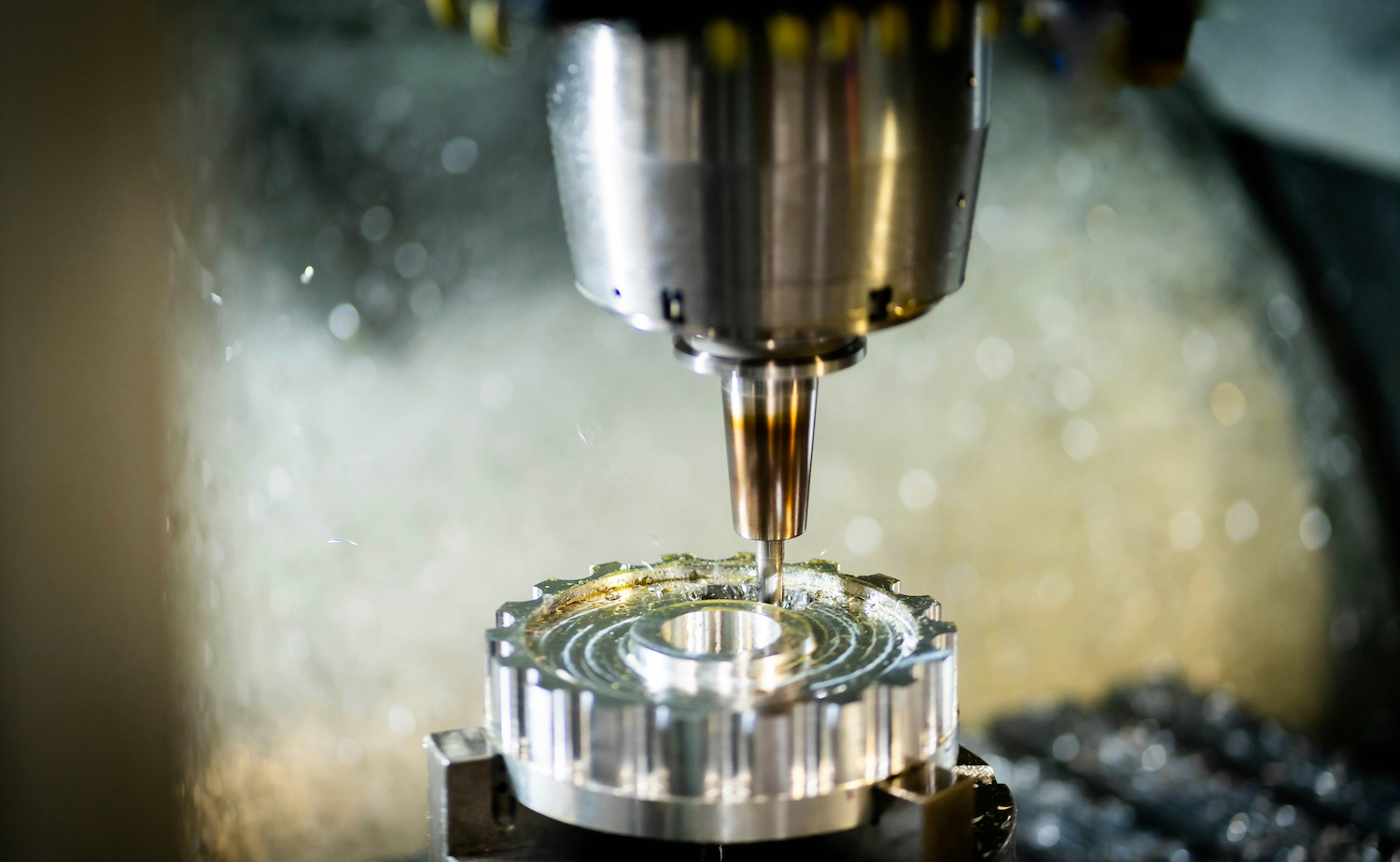


Walk into a furniture workshop today and the first thing you notice is what’s missing. The noise. Not the absence of it, exactly, but the pattern. Instead of the stop-start rhythm of a circular saw and someone swearing at a mitre, there’s a steady mechanical hum that lasts twenty minutes and then stops.
That hum is a CNC router. And over the past fifteen years or so, it has rewritten how cabinets, tables, shelving and shopfitting get built, without most people outside the trade noticing.
From Pattern Templates to Code
CNC stands for computer numerical control, which is a dull name for something fairly clever. A designer draws a part on screen. Software converts that drawing into coordinates. A spindle spinning at 18,000 RPM then follows those coordinates across a sheet of material, cutting shapes to within a fraction of a millimetre.
Before this, repeat work meant templates. A cabinetmaker building forty identical kitchen doors would make a jig from plywood, clamp it down, run a router around the edge, unclamp, reposition, repeat. Accurate enough, but the jig wore down. Part number one and part number forty were never quite twins.
Digital files don’t wear out. That single fact changed the economics of small-batch furniture completely.
Why Tolerances Suddenly Mattered
Flat-pack assembly only works if every hole lines up. Cam locks, dowels, screw-in feet, European hinges with their 35mm boring cups; all of it depends on holes landing exactly where the instruction diagram says they will.
Hand-drilling that lot across hundreds of panels is miserable work with a decent error rate. A CNC machine with a drill bank punches the whole pattern in seconds and does it the same way every time. That reliability is the hidden reason IKEA-style assembly became tolerable rather than infuriating.
The Material Side of the Story
Machines are only half of it. CNC routers reward materials that behave predictably, and that pushed engineered sheet goods to the front of the queue.
Solid timber moves. It expands across the grain in humid weather and shrinks when the heating goes on. Lovely stuff, but a nightmare if you’ve programmed a toolpath that assumes the sheet is exactly where you left it. Plywood is more stable but has voids and grain direction to think about.
MDF sits in the sweet spot. It has no grain, no voids and a consistent density right through, which means a router bit cuts the same resistance in every direction. Cut a curve in MDF and you get a clean edge you can paint straight away. Cut the same curve in solid oak and you’ll be sanding out tear-out for an hour.
Thickness choice matters more than people expect. An 18mm sheet is the default for carcass work, but 15mm MDF has become a favourite for drawer boxes, cabinet backs, shelving and anything where shaving three millimetres off the wall thickness buys useful internal space without compromising strength. It’s also noticeably lighter to lift onto a machine bed, which the people doing the lifting appreciate.
Nesting and the War on Offcuts
Here’s where software earns its keep. Nesting algorithms arrange every part of a project onto a sheet like a jigsaw, rotating and shuffling shapes to squeeze out maximum yield.
Manual layout on a 2440 x 1220mm sheet might achieve 70 per cent material usage on a complex job. Good nesting software regularly hits 85 to 90 per cent. Across a year, that difference pays for a lot of machine time.
Less waste means lower material spend and smaller skip bills
Fewer handling steps because parts come off the bed labelled and ready
Faster quoting since the software tells you exactly how many sheets a job needs
What It Did to Small Workshops
The common assumption was that automation would hand everything to the big factories. The opposite happened in a lot of cases.
Entry-level CNC routers now start around the $15,000 mark, with capable production machines in the $40,000 to $80,000 range. That’s a serious outlay, but it’s within reach of a two-person workshop in a way that a factory-scale beam saw never was.
The result is a wave of small outfits doing bespoke built-ins, curved reception desks and one-off retail fitouts; work that used to be either prohibitively expensive or simply declined. A custom radius bookcase is no longer a heroic hand-shaping exercise. It’s a file and a sheet.
The Skills Shifted, They Didn’t Disappear
Plenty of old hands worried the craft would die. It didn’t. It moved.
Knowing which bit to use, what feed rate stops burning, how to hold a thin part down without it chattering loose, where to leave material for hand-finishing; none of that comes from the software. CAD knowledge joined the toolkit rather than replacing it.
Where This Is Heading
Machine learning is starting to creep into toolpath optimisation, and five-axis routers are slowly becoming affordable enough for mid-sized shops. Expect more curved, sculptural furniture at ordinary price points.
What won’t change is the basic trade-off. Good design and good material still decide whether the finished piece is worth owning. The machine just stopped being the bottleneck.
