

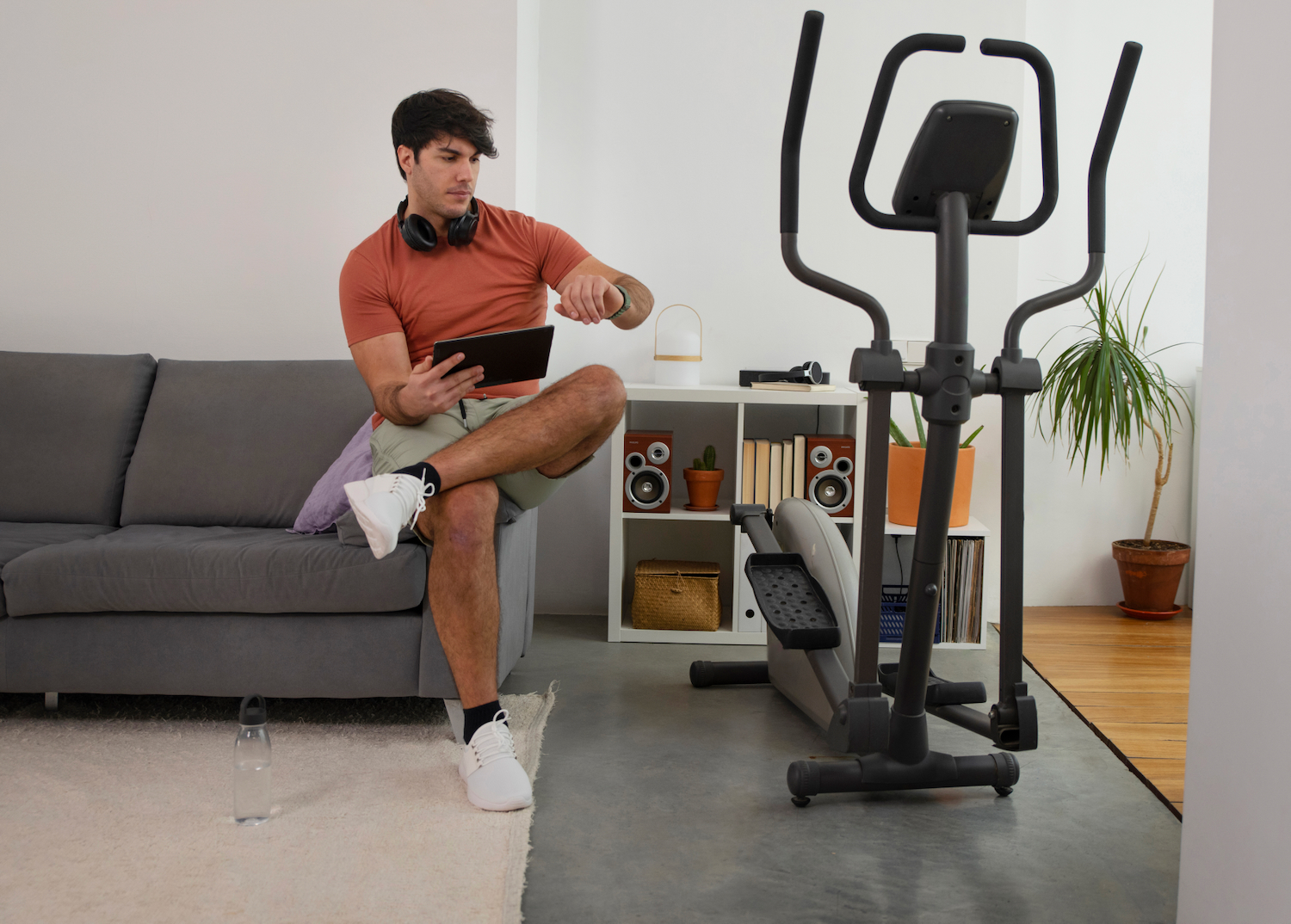


If you spend your days optimising your tech setup, researching the best hardware, and making deliberate decisions about every tool in your workflow, it makes sense to apply the same thinking to your fitness setup.
Yet most people who are meticulous about their desk setup, monitor calibration, and mechanical keyboard switches will throw together a home gym with whatever was on sale without a second thought.
The good news is that the home gym equipment and fitness tech market has matured significantly in the past few years. There is now a meaningful difference between thoughtful, well-specified home gym setup and a random collection of equipment that sits unused in a spare room. Getting it right is the same process as getting any tech purchase right: define your requirements, understand the specifications that actually matter, and buy quality once rather than replacing cheap gear repeatedly.
This guide is written for the technically minded Australian who wants to build a home training setup that is efficient, durable, well-integrated, and capable of delivering serious results without requiring a commercial gym membership.
Wearable Training Technology: Start With Data
Before buying any equipment, the most valuable investment a data-driven person can make is in a wearable that gives them accurate, actionable training and recovery data.
The Apple Watch remains the most capable all-round smartwatch for fitness tracking in Australia, with strong heart rate monitoring, solid workout detection, and seamless integration with Apple Health and third-party training apps. For pure fitness tracking depth, Garmin’s Forerunner and Fenix lines offer superior GPS accuracy, more granular training load metrics, and battery life that handles multi-day tracking without charging anxiety.
Whoop and Oura Ring take a different approach, focusing on recovery, sleep quality, and readiness scoring rather than active workout tracking. Both are subscription-based and provide genuinely useful daily guidance on whether to push hard or pull back, which is the kind of data that separates consistent long-term progress from overtraining and injury cycles.
Heart rate variability, resting heart rate trends, sleep quality metrics, and training load calculations are the data points that most directly inform intelligent training decisions. A wearable that tracks these accurately is more valuable to long-term progress than almost any piece of physical equipment.
Smart Training Apps and Programming Platforms
The proliferation of high-quality training apps means there is no longer any reason to train without a structured programme and progress tracking. The platforms worth knowing about span several different use cases.
Strong is the most widely used strength training logging app in Australia, offering simple set and rep tracking, built-in progress graphs, and a clean interface that does not get in the way of the training session. For anyone doing barbell or dumbbell-based training, it is the obvious first app to install.
Whoop’s companion app, for those running the wearable, provides the most sophisticated recovery and strain coaching available on a consumer platform. Its daily readiness scores and personalised exertion targets are genuinely useful for managing training intensity across a week.
Peloton, Whoop, and Apple Fitness Plus all offer guided workout content that pairs well with home gym equipment. For people who train better with structured coaching than with self-directed sessions, these platforms add significant value and reduce the friction of deciding what to do each day.
The Physical Setup: Equipment That Actually Earns Its Space
Smart fitness tech gives you data. Physical equipment gives you the actual training stimulus. The question for a home gym is which equipment delivers the best return on floor space and investment for your specific training goals.
A power rack or squat stand is the highest-value piece of equipment for strength-focused training. It enables squats, bench press, overhead press, pull-ups, and a full range of barbell movements within a compact footprint. Combined with a barbell and a set of plates, it covers the majority of what a serious strength training programme requires.
Weight plates are the component most worth investing in properly through Kinta Fitness. The specification difference between cheap cast iron plates and quality calibrated plates is not just cosmetic. Calibrated plates are accurate to within tight tolerances, which matters for progressive overload tracking. Bumper plates in rubber are safer for home use, protect your flooring, and allow for exercises like the clean and deadlift without the noise and impact that metal plates on metal generate. Choosing the right plate type and weight range from the outset saves significant money compared to buying cheap and replacing early.
Adjustable dumbbells are the space-efficient alternative to a full dumbbell rack. Bowflex SelectTech and Ironmaster both produce quality adjustable dumbbell systems that replace fifteen to twenty pairs of fixed weights in the footprint of a single pair. The adjustment mechanism on quality systems is fast enough that it does not disrupt training flow, and the weight range typically covers light conditioning work through to serious pressing and rowing loads.
Connectivity and Integration: Making the Setup Work Together
The tech-savvy home gym owner has an opportunity that commercial gym users do not: full control over how their equipment, wearables, and apps connect and share data.
Apple Health on iOS is the most effective central aggregation point for Australian users who are already in the Apple ecosystem. Workout data from apps like Strong flows into Apple Health automatically. Heart rate and recovery data from Garmin, Whoop, or Oura can be configured to sync as well. The result is a unified health and training dashboard that makes longitudinal trend analysis straightforward.
For those on Android, Google Fit serves a similar aggregation function, though the third-party app ecosystem for fitness data is somewhat less seamless than Apple Health. Garmin Connect is platform-agnostic and provides some of the best training analytics available regardless of which phone you use.
Automated workout logging through platforms like Zapier or direct API integrations allows data to flow into spreadsheet-based tracking systems for those who want more analytical control than any consumer app provides. This level of integration is niche, but for the genuinely data-obsessed, it is entirely achievable with off-the-shelf tools.
Building the Setup Incrementally
The most common home gym mistake is trying to build the complete setup at once and ending up with either overspending on equipment that does not get used or a compromise on quality in the name of hitting a budget.
A better approach is to build incrementally around your primary training modality. Start with the wearable and a logging app. Add the single most impactful piece of equipment for your goals, whether that is a power rack, a set of adjustable dumbbells, or a quality cardio machine. Add plates, accessories, and secondary equipment over subsequent months as your training habits solidify and your understanding of what you actually use develops.
The result is a home gym that reflects how you actually train rather than how you imagined you would train, equipped with quality gear that earns its space every session. For a technically minded person, it is the same methodology that produces a well-optimised desk setup. Apply it to your training environment, and the results follow the same logic.
