

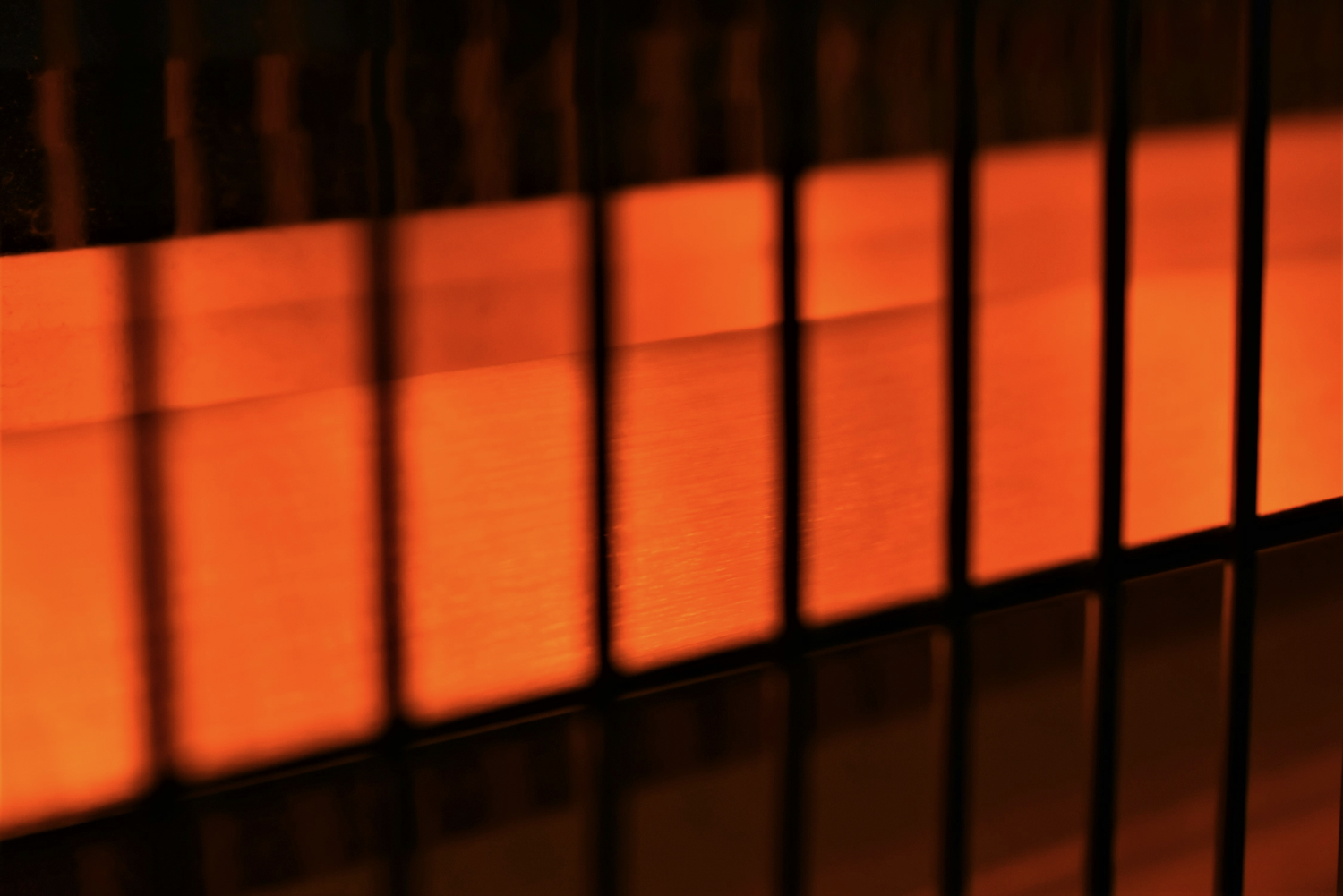


Infrared heaters warm people and surfaces directly when they are in line of sight, much like the feeling of standing in sunshine.
Unlike convective heaters that warm the air, radiant heat lands on whatever the heater points at. That makes infrared a sensible option for spot heating in small rooms, draughty spaces, or bathrooms where warm air can escape quickly.
It also has limits. For heating a whole home for long periods, Australian guidance usually points to other options. Energy.gov.au notes that reverse-cycle air conditioners can deliver about 300 to 600 per cent efficiency because they move heat rather than generate it. Infrared is best understood as targeted comfort, not a whole-home heating plan. This buyer’s guide covers the types, sizing, safety checks, and compliance points worth reviewing before you choose a model.
How infrared heat works compared with other heaters
YourHome describes radiant heating as warmth that reaches people and objects directly. This can suit draughty rooms and bathrooms, where heated air would otherwise drift away. Convective heaters work differently. They warm the air in a space and rely on that air staying put.
Because infrared travels in a straight line, placement matters. CHOICE points out that infrared heaters need direct line of sight and should not face windows, since the heat can pass through glass and warm the outdoors instead of you. Some panel models are designed to sit behind mirrors in bathrooms, where the heat can still reach the room.
Types of indoor infrared heaters
Most Australian buyers will see two broad categories for indoor use.
- Far-infrared panels. These are silent, produce no visible light, and suit enclosed rooms such as bedrooms and studies. They are often wall-mounted or ceiling-mounted.
- Low-glow or zero-light bar heaters. These heat a defined zone. Many bar-style heaters marketed for patios are rated for outdoor use only and should not be brought inside unless the manufacturer clearly states they are suitable for indoor use.
The key specification is the IP rating, which describes protection against dust and water. For example, the Herschel Summit 2600 lists IP64 and notes that outdoor use requires permanent cover and protection from water ingress. The Heliosa 66 Black Glass short-wave heater lists an IPX5 outdoor rating and is designed for outdoor use. These are examples of how manufacturers label products, not performance endorsements. An outdoor rating does not automatically mean a heater belongs in a living room.
Sizing and placement that actually feels warm
Manufacturers usually size units by room volume, insulation level, and target temperature, and many provide online calculators. Treat these as a starting point. With infrared, the direction of the heat matters as much as the wattage, because the warmth you feel comes from direct exposure to occupied areas.
Use these practical rules when planning placement:
- Mount panels to walls or ceilings only as described in the manufacturer’s manual.
- Avoid pointing units at large windows, where heat can pass through glass.
- Keep clearances generous. Fire and Rescue NSW recommends keeping everything at least one metre away from heaters.
- Never place a heater on a shelf, near curtains, or where fabric can fall against it.
For portable units, CHOICE and Fire and Rescue NSW both advise plugging heaters directly into a wall socket, not into a powerboard or extension lead.
Features, safety marks, and bathroom use
- Safety features. For portable models, look for tip-over protection, overheat protection, a thermal cut-out, and a child lock.
- Controls. Thermostats and timers help avoid running a heater longer than needed. Some panels pair with separate thermostat accessories or app control.
- IP rating for wet areas. Bathrooms have zone rules. NSW guidance based on AS/NZS 3000 indicates that switches within bathroom Zone 2 require at least IPX4, or must be kept clear of Zone 2 by enough distance, such as 0.6 m from baths and showers.
- Approvals. Electric room heaters sold in Australia must meet Australian Standards and display an Australian approval number or mark, such as the Regulatory Compliance Mark. A ‘CE’ mark is not an Australian electrical approval.
Any hardwired or fixed installation, especially in a bathroom, must be carried out by a licensed electrician. This guide does not cover wiring, and DIY fixed installs are not appropriate.
Running costs and realistic expectations
CHOICE reports that portable electric heaters are generally the least cost-efficient form of heating in Australia, while reverse-cycle air conditioning is the most cost-efficient. That does not make infrared pointless. It means infrared is better used for targeted comfort in one room than for heating a whole house cheaply.
Before you buy, check the likely running cost against your electricity rate and expected hours.
Safety and compliance checklist for Australia
Run through this list before you commit to a model or switch one on.
- Check for an Australian approval number or mark. Do not rely on a ‘CE’ label.
- Keep at least one metre of clearance around the heater.
- Plug portable heaters directly into a wall socket, not a powerboard or extension lead.
- In bathrooms, follow IP ratings and zone rules, and use a licensed electrician for any fixed install.
- Never use fuel-burning outdoor heating or cooking equipment indoors. NSW fire authorities warn this can cause lethal gas buildup and fire.
- Check recalls before using any second-hand unit at productsafety.gov.au.
How to shortlist models
Once you know your room size, mounting position, use case, and required IP rating, compare categories side by side. A collection of indoor infrared heater Australia options can help you compare panels, portable units, and compatible thermostats in one place. Treat product listings as research prompts, then confirm the approval mark, manual, and suitability for your specific room before purchase.
Frequently asked questions
Are infrared heaters energy-efficient for whole homes?
For heating an entire home, they are usually not the most cost-efficient choice. CHOICE notes portable electric heaters are generally the least cost-efficient form of heating in Australia, while reverse-cycle air conditioning is the most cost-efficient. Use infrared for targeted comfort in one room, and consider reverse-cycle for whole-home heating.
Is an infrared panel safe in a bathroom?
It can be, if it meets the wet-area requirements. NSW guidance based on AS/NZS 3000 indicates Zone 2 needs at least IPX4 protection or enough clearance from baths and showers. Check the IP rating and have any fixed installation completed by a licensed electrician.
