



Walk onto most Australian job sites, warehouses or commercial kitchens and you’ll still find a clipboard somewhere. Paper checklists have been the backbone of workplace safety for decades, and for good reason – they’re simple, cheap and everyone knows how to use them.
But as workplaces get more connected, that same simplicity is starting to look like a liability. A checklist only tells you what someone noticed and wrote down. It says nothing about what happened five minutes after the form was signed off, or what’s quietly going wrong on a night shift when no one’s walking the floor.
That gap between “we did an inspection” and “we actually know what’s happening on site right now” is where a new generation of workplace technology is starting to make a real difference. Internet of Things (IoT) sensors and artificial intelligence are moving safety and compliance from a periodic, paper-based exercise into something closer to a live feed of what’s really going on across a business.
The Trouble With Point-in-Time Inspections
Traditional inspections are, by design, a snapshot. A supervisor walks a site once a day, or once a shift, ticks off a checklist and files it away. Between those snapshots, plenty can change. A fridge in a commercial kitchen can drift out of temperature range for hours before anyone notices. A piece of machinery can start vibrating abnormally long before it fails. A fire exit can be blocked for an entire afternoon shift without triggering anything more than a passing comment.
None of this is because people aren’t doing their jobs. It’s simply that a human being can only be in one place at a time, and paper forms can only capture what someone remembers to record. The result is a safety and compliance system that reacts to problems after they’ve already caused damage, downtime or, in the worst cases, injury.
This is exactly the gap that connected sensors are designed to close, and it’s worth understanding how they do it before looking at what happens to all that extra data once it starts flowing in.
How IoT Sensors Fill the Gaps Between Inspections
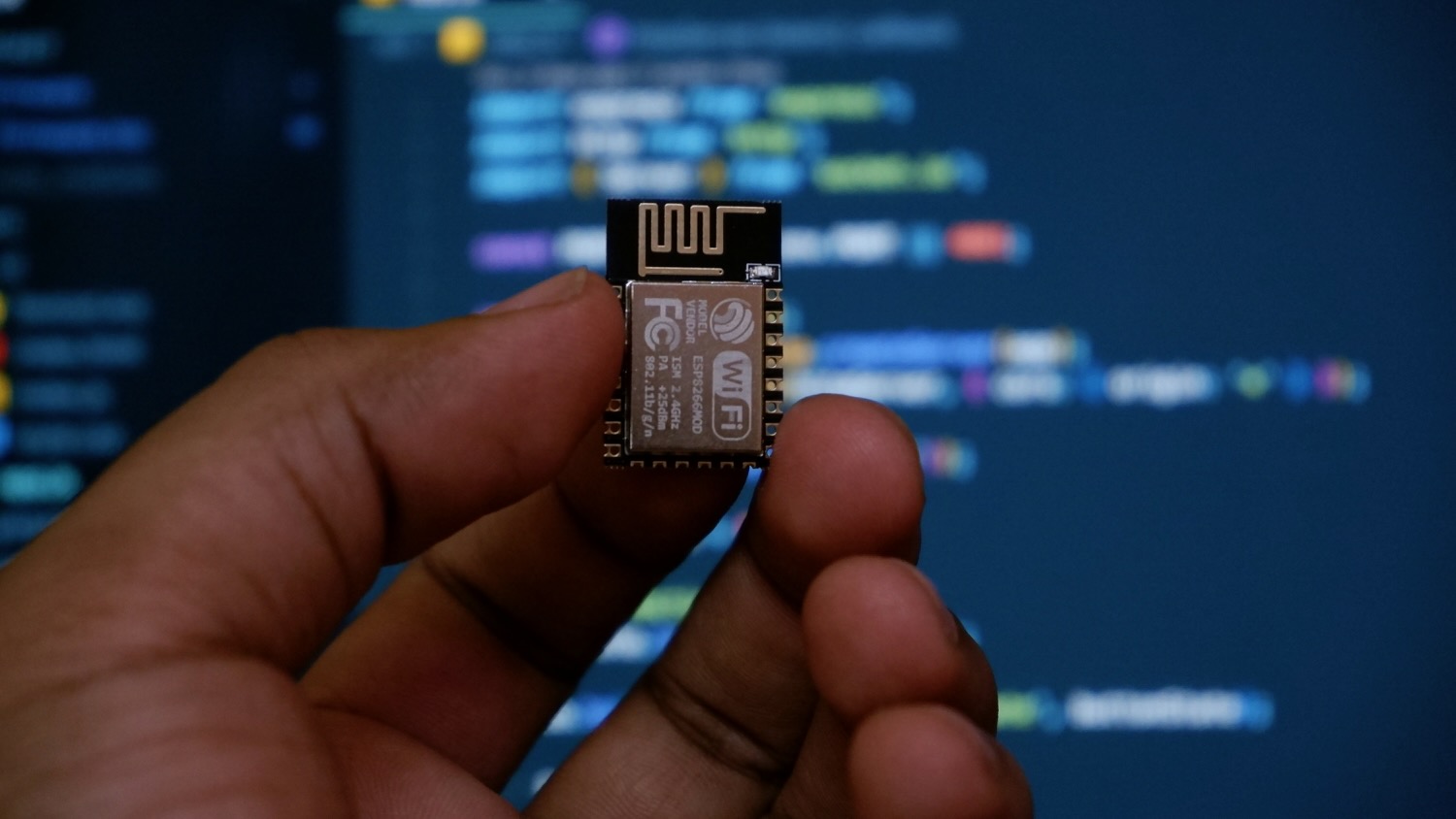
IoT sensors are small, often inexpensive devices that monitor a specific condition – temperature, humidity, vibration, gas levels, door and equipment status – and send that data over Wi-Fi or a low-power wireless network to a central system. Unlike a person doing a walkthrough, a sensor doesn’t take breaks, doesn’t forget to check a reading, and doesn’t need to be physically present to notice something has changed.
In a cold storage facility, a temperature sensor can flag a fridge that’s crept above a safe threshold within minutes, rather than at the next scheduled check. On a construction site, a vibration or tilt sensor on scaffolding can pick up movement that a visual inspection would miss entirely. In a warehouse, door sensors can confirm that a loading bay was actually closed after hours, rather than relying on someone remembering to tick a box.
The value here isn’t really about replacing people. It’s about giving frontline teams a continuous stream of information that sits alongside their own eyes and experience, so problems get caught while they’re still small and cheap to fix. But raw sensor data on its own isn’t much use if someone still has to sit and watch a dashboard all day. That’s where the next layer of the technology comes in.
From Raw Data to Useful Action: Where AI Fits In
Once sensors are feeding data into a system continuously, the challenge shifts from “how do we collect this information” to “how do we make sense of it fast enough to act on it”. This is where artificial intelligence has quietly become a practical, rather than futuristic, part of workplace operations.
AI models can sit across sensor feeds and inspection data and pick out patterns that would take a human weeks to spot manually – for instance, that a particular piece of equipment tends to overheat every time it’s run past a certain load, or that near-miss reports spike on a specific shift. Instead of every reading needing a person to review it, the system can be trained to flag only the readings that actually matter and route them to whoever needs to deal with them.
AI is also changing how issues get logged in the first place. Rather than typing out a description of a problem, a worker can now often just take a photo or leave a quick voice note, and the system will turn that into a structured issue, complete with location, category and suggested priority. That matters because the biggest barrier to good safety data has always been friction – if reporting a hazard takes ten minutes of form-filling, plenty of hazards simply never get reported. Cutting that friction is one of the quiet but genuinely useful applications of AI on the frontline, and it’s a big part of what platforms like Mitti are built around – combining sensor data, inspections and AI-assisted issue capture into one operational picture rather than a pile of disconnected spreadsheets and paper trails.
What This Actually Looks Like Across Different Industries
It’s easy for this kind of technology to sound abstract, so it helps to look at how it plays out in different settings. In manufacturing, sensors attached to machinery can track vibration and temperature trends over time, giving maintenance teams a warning before a breakdown rather than after one. That shift from reactive to predictive maintenance can be the difference between a five-minute adjustment and a full production line stopping for a day.
In hospitality and food service, connected temperature monitoring in fridges, freezers and hot-holding units takes the guesswork out of food safety compliance. Instead of a staff member manually recording readings a few times a day, the system logs them automatically and only alerts someone when a reading actually falls outside a safe range. That’s a small change with a big payoff, both for food safety and for the amount of admin time it frees up.
On construction sites, the combination of sensors and mobile inspection tools helps supervisors keep track of scattered crews and equipment across a large, constantly changing environment. A lone worker feature can check in on someone working solo in a remote part of a site, while contractor management tools make sure every subcontractor has completed the right inductions before they even pick up a tool. None of these features work in isolation – they’re most effective when the data from sensors, inspections and worker reports all feeds into the same system, which is what makes the overall picture reliable rather than just a collection of separate alerts.
Getting Started Without Overhauling Everything
One of the more common misconceptions about connected workplace technology is that adopting it means ripping out every existing process and starting again. In practice, most businesses get better results by starting small. A handful of sensors in the areas that carry the most risk – a cold room, a piece of critical machinery, a high-traffic loading dock – can prove the value of the approach before it’s rolled out more broadly.
The same goes for digitising checklists and inspections. Existing paper forms can usually be converted into digital versions without redesigning the underlying process, which means frontline teams aren’t being asked to learn a completely new way of working, just a faster and more reliable way of doing what they already do. Training data, task assignments and issue reports sitting in the same system as sensor readings is what turns a set of individual tools into something closer to a genuine operations picture, rather than another app competing for attention alongside the clipboard.
It’s also worth being realistic about what this technology can and can’t do. Sensors and AI are good at spotting patterns and flagging anomalies, but they don’t replace the judgement of an experienced supervisor or the instinct of a worker who notices something feels off. The goal isn’t to automate people out of safety decisions, but to make sure the information they’re working with is as current and complete as possible.
Where Connected Workplaces Are Headed Next
The direction of travel is fairly clear. As sensors get cheaper and AI models get better at interpreting unstructured information like photos and voice notes, the line between “doing an inspection” and “having a live view of the workplace” will keep blurring. Businesses that have historically relied on periodic checks are gradually shifting towards continuous, real-time monitoring, not because it’s trendy, but because it catches problems earlier and reduces the amount of manual admin sitting on top of everyday safety work.
None of this means the clipboard is about to disappear overnight, and for plenty of smaller operations, paper checklists will remain perfectly workable for years to come. But for businesses managing multiple sites, shift-based teams or equipment where a small fault can turn into a costly failure, the case for connecting sensors, inspections and AI into one system is becoming harder to ignore. It’s less about chasing the latest gadget and more about making sure the people on the ground have accurate, current information the moment they need it, rather than finding out about a problem on the next scheduled walkthrough.
