

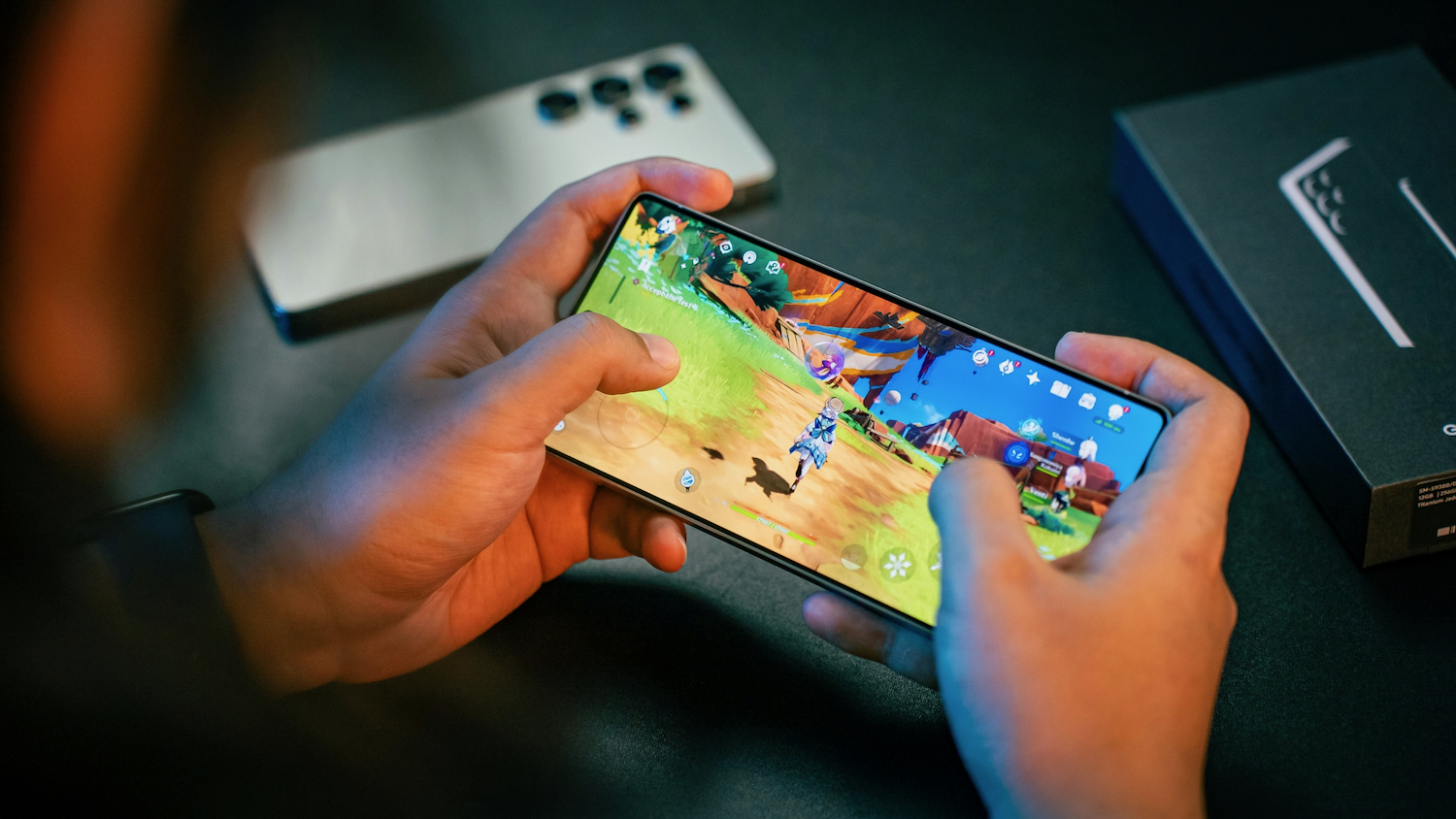


Gaming phones are getting ridiculously powerful. We’re well past the point where mobile gaming only means simple games designed to pass ten minutes while you’re waiting for something.
Newzoo expects 3.1 billion people to play mobile games in 2026, with the market generating $121.1 billion. Console gaming is forecast at $46.9 billion for the year, so mobile isn’t exactly the smaller side of gaming anymore.
Below, we’ll explore how gaming phones are closing the gap with consoles.
Advanced, Powerful Hardware and Graphics Potential
Current gaming phones have everything needed for demanding games, from processors to cooling systems.
The REDMAGIC 11 Pro, for example, uses Qualcomm’s Snapdragon 8 Elite Gen 5 with an active cooling system and a 144Hz display. Testing by Android Authority found the chipset could comfortably run Call of Duty Mobile at 120fps, something we couldn’t have imagined even five years ago, and Genshin Impact held around 60fps at maximum settings.
Heat is still sometimes a bit of a limitation because you’re putting all that hardware inside something that fits in your pocket. But that’s also why gaming phones are investing more in vapor chambers, fans, and other cooling methods.
Remote For Cloud Gaming and Streaming, With More Options Than Ever Before
DEvelopers have identified the high potential of mobile gaming, and the market is now brimming with titles that have been optimized for the small screen. It’s not all about the app store downloads, either. Leading sites utilize advanced PWA technologies to offer smooth, high quality experiences without a single download needing to take place. True versatility vs apps that need to be added to a phone via a WiFi connection.
But the phone doesn’t always need to run the game, either. Xbox Cloud Gaming lets players stream supported console games directly to phones and tablets. Xbox Remote Play can also stream games installed on your own console, with progress carrying across devices.
GeForce NOW takes the same idea further on supported Android phones. NVIDIA currently supports streaming at up to 1440p and 120fps, although that level needs a compatible device, Ultimate membership, and at least a 35Mbps connection. Add a proper controller that can connect via Bluetooth, and we’re nowhere near what traditional mobile gaming was not so long ago.
Remember that cloud gaming is only as good as your connection, and bad Wi-Fi can ruin the illusion quickly.
Engagement Levels Competing With Consoles
Sensor Tower recorded around 221 billion hours of mobile gaming playtime during the first half of 2026.
Then you’ve got the 3.1 billion mobile players Newzoo expects this year. Mobile and console habits are still different, so not everyone will spend a 6-hour gaming session on their phone as they might on a console. But developers have an enormous audience that’s willing to spend a lot of time with mobile games.
Gaming phones are being built for those people rather than your parents occasionally playing Candy Crush on the bus or the sofa.
Cross-Platform Releases on Mobile and Console
Warframe launched globally on Android in February 2026. It’s not a small mobile spin-off. The Android release uses the same content build as the main game and supports cross-platform progression, letting players use the same account across mobile, PlayStation, Xbox, Nintendo Switch, and PC.
Fortnite, Genshin Impact, and other major games already work across mobile and console ecosystems. Players are getting used to starting something on one device and continuing somewhere else rather than choosing one platform and staying there.
Gaming phones still have obvious disadvantages compared with consoles, such as smaller screens or batteries that run down, but the gap is definitely shrinking. It’ll be interesting to see how close the two become over the next ten years.
