



In any business, there comes a time where leaders need to make strategic investments to support company growth. There are some tech investments that stand out as an easy no-brainer, like AI and automation or cloud infrastructure – but then there are others that may demand a more discerning approach when it comes to budget allocation. For eCommerce, market, and brick and mortar retailers, however, agile manufacturing is not one of them.
The ability to maintain full control over your business manufacturing processes is what makes agile manufacturing such an attractive investment point for small to medium-sized enterprise owners across Australia. Where some manufacturers force you to order in bulk and store the excess in your warehouse or even at home, agile manufacturing allows you to produce to order, making agile methods both more cost-efficient and eco-friendly.
So all that’s left to ask yourself is what an ideal agile manufacturing operation looks like for your business. Below, we’ll be diving deeper into definitions of agile manufacturing, and how SMEs may be able to take advantage of agile manufacturing technologies.
What is agile manufacturing?
Agile manufacturing is any production process that focuses on speed and flexibility through the use of small batch manufacturing technologies and made-to-order products. Agile manufacturing can be 100% self-managed production or in collaboration with manufacturing partners, whether it be laser cutting in Melbourne with local pick-up options, or 3D printing in India with secure shipping.
The main advantage of agile manufacturing when compared to traditional manufacturing methods is that it allows retailers to adapt to shifting customer demands, producing products to meet real-time customer orders as opposed to basing production off of market forecasts.
Agile manufacturing also supports business owners in maintaining simplified supply chains, meaning significantly less risk of supply chain disruptions.
Key elements of agile manufacturing
Agile manufacturing operations can look different depending on the scope of your production processes. For example, a small-batch custom jewellery manufacturer working in conjunction with a laser cutter may maintain different processes to a parts manufacturer using in-house 3D printing tech.
Here are some of the foundational principles of agile manufacturing that most SMEs seek to embody with agile production investments.
Made-to-order vs. made-to-stock
Made-to-order (or MTO) is proving to be a more sustainable production model for SMEs over made-to-stock (MTS), especially as more eCommerce retailers transition away from investing in warehouse space and opt more for 3PL (third-party logistics) services.
The logic here is simple: by only producing what your business is actually selling, you eliminate all the overhead costs accompanying MTS production, which not only includes actual production costs but also materials costs, and storage/warehousing costs as well.
With MTO, however, your business is always guaranteed to earn back what it spends on production, because customer orders have already been paid for. And with fast manufacturing, your consumers won’t even have to wait that long for their order to be fulfilled either.
Modular product designs
Another benefit of agile manufacturing is that you can invest in your own production equipment and thus, take full control over your company output, including product design. If you want to develop a product that maintains its own catalogue of 3D printable spare parts, for instance, you can easily do so, and offer to either print the parts on demand or share the designs for spare parts with your customers online.
Producing easily repairable or even modular product designs also opens up opportunities for easy upselling within your product ecosystem. Let’s say, for instance, that you manufacture and sell a modular couch. Your customers can start off with just one or two seats and invest in more as needed. The couches can also be connected and rearranged in different ways, and you may even offer different cushion colours and accompanying modular accessories like side tables down the line as well.
The sheer number of interchangeable options creates repeat business, as your customers keep looking to your product range to upgrade their existing lounge suite. Not only this, but you’re also able to snag customer interest across a variety of demographics, ranging from young eco-conscious shoppers to older demographics with more disposable income who previously bought into your ecosystem.
Energy-efficient manufacturing methods
On top of supporting modular and MTO production, many agile manufacturing technologies are also more likely to be energy-efficient compared to traditional manufacturing equipment. Instead of factories fitted with large machinery churning out incremental production components, agile manufacturing typically maintains smaller-scale workflows with lower energy requirements.
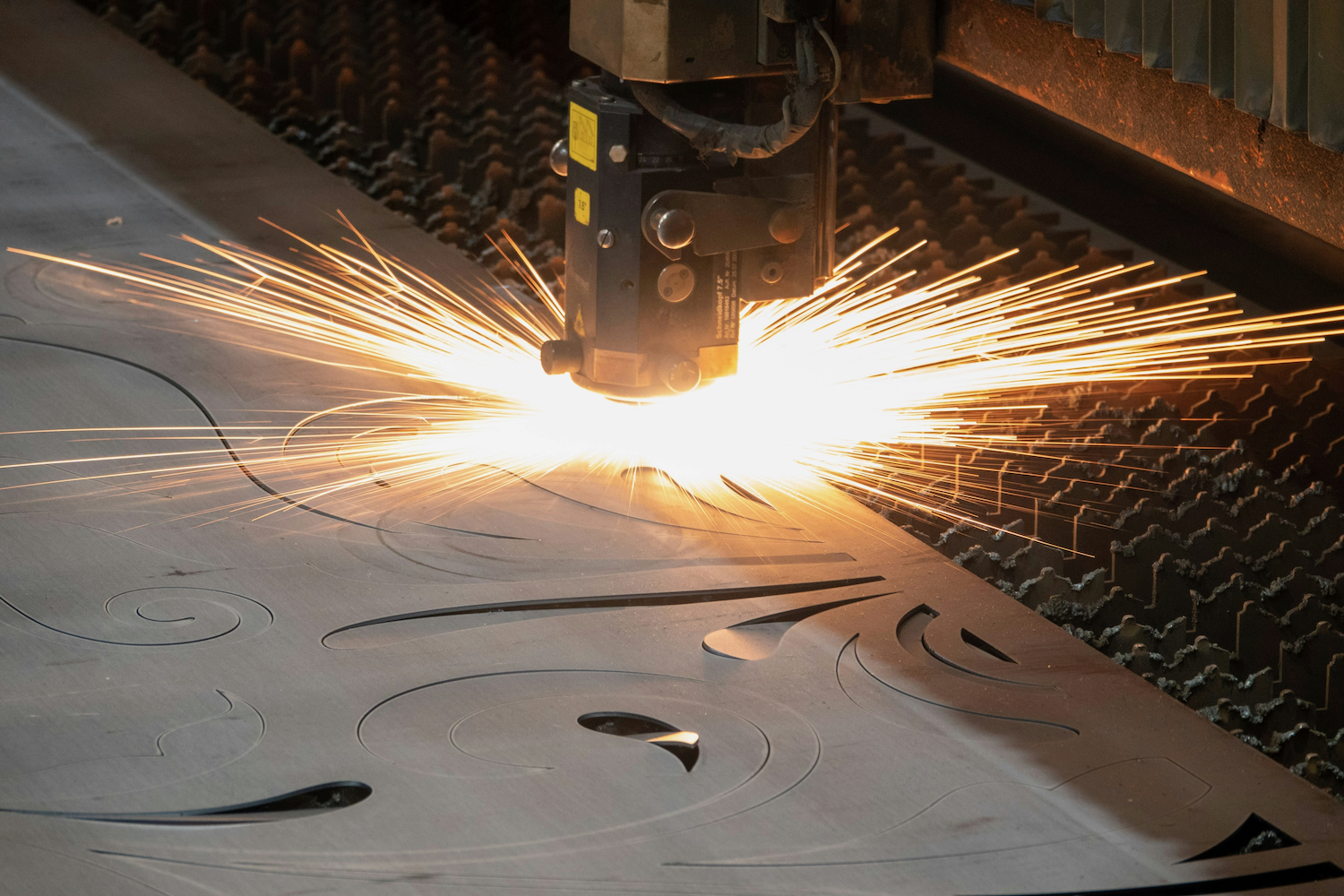
Laser cutting is a good example here. Modern laser cutting technologies can operate on a modest amount of energy, making it one of the most agile manufacturing processes today. Alongside this, CNC laser cutting processes can be optimised to produce a minimal amount of physical waste, helping manufacturers conserve their raw materials and produce fewer offcuts and botched designs.
For retailers looking to maintain eco-friendly production practices, agile manufacturing is guaranteed to be the best method for keeping your energy consumption moderate and manageable.
Real-time monitoring and data insights
Of course, robust environmental monitoring is essential for energy management, but thankfully agile manufacturing tools may have you covered there too. With integrated IoT technology driving a lot of agile manufacturing equipment like CNC machines or 3D printers, agile manufacturers can maintain greater visibility over the overall environmental impact as well as other metrics attached to their production processes.
Your agile manufacturing workflows can also utilise AI-powered data management platforms to gain specific insights across your performance monitoring. For example, if you wanted to compare how much plastic filament you used this time last week versus this week, you can gain insights from your 3D printer’s AMS (automatic material system). Even entry-level 3D printers like Bambulab’s X2D include AI monitoring and compatibility with AMS systems.
And even if you aren’t using 3D printing, AI-powered data tools are also becoming the norm across other agile manufacturing tools like CNC and laser cutting machines. It’s all about finding the right centralised data management platform to compliment your agile manufacturing processes.
Whole systems vs. segmented production lines
And speaking transparency and visibility, unlike traditional manufacturing processes where factory workers may be stationed at just one segment in your production line, agile manufacturing typically maintains a more whole systems approach, where manufacturers maintain full control over all project components. This means that manufacturers working with agile models are more likely to possess dynamic knowledge across their full production line, and can effectively troubleshoot no matter what production phase you’re in.
This is advantageous for business clients partnering with manufacturers as well, because there’s guaranteed to be more visibility over your manufacturing project. With one dedicated manufacturing staffer on every project, agile manufacturing procedures are more likely to deliver timely and to a consistently higher quality when compared to highly segmented traditional production lines.
Closed loop supply chains
Finally, the improved environmental performance and sustainable resource utilisation of agile manufacturing also makes this new-age take on fabrication a better fit for closed loop supply chains (i.e. where manufacturers can feasibly repair or reuse broken or depleted products for future production). In fact, we’re already seeing some manufacturers globally integrating closed loop manufacturing principles into their own workflows, like plastics manufacturers recycling their own plastic bottles and aluminium cans.
Closed loop supply chains can also include strategising for changed behaviour in consumers, like encouraging people to recycle their old mobile phones (which is direly needed here in Australia). This is particularly important for phone manufacturers, as rare or precious metals like gold, cobalt, and aluminium can be recovered for reuse through discarded phones. Manufacturers like Apple have also been working on closed loop solutions to ensure their original investments in these materials make their way directly back to Apple facilities rather than ending up in the hands of competitors. Apple Stores have played a strong role here, but there’s an argument to be made that local agile manufacturing methods can also help to close the gap between Apple’s retail bodies and their global supply chain in keeping recycled materials in circulation.
Key agile manufacturing technologies
We’ve already touched upon a few of the more popular agile manufacturing technologies used by businesses worldwide in our overview above. But let us rehash our insights for you with a quick little list.
Here are the most commonly used agile manufacturing technologies for SMEs:
- CNC machines
- Laser cutting machines
- 3D printers
- Reconfigurable manufacturing systems (RMS)
- AutoCAD software-enabled machinery
You may find that some manufacturing technologies are better suited to your enterprise than others. For example, retailers looking to manufacture metal components to specific measurements are more likely to gain value from partnering with a CNC or laser cutting specialist, whereas retailers looking to manufacture plastic components could benefit from 3D printing. It’s up to you to determine what agile manufacturing arrangement will best suit your business.
Harness the power of agile manufacturing for your business
In all cases, agile manufacturing procedures are defined by their ability to work with building blocks, allowing for fast prototyping and production that lets retailers maintain full control over their manufacturing processes and their outputs. If you’re keen to offer a product that could be produced or even improved by opting for an agile manufacturing arrangement, then be sure to look into the manufacturing methods that are available to you, whether through local small batch partners like laser cutting teams, or even through your own tech investments.
