

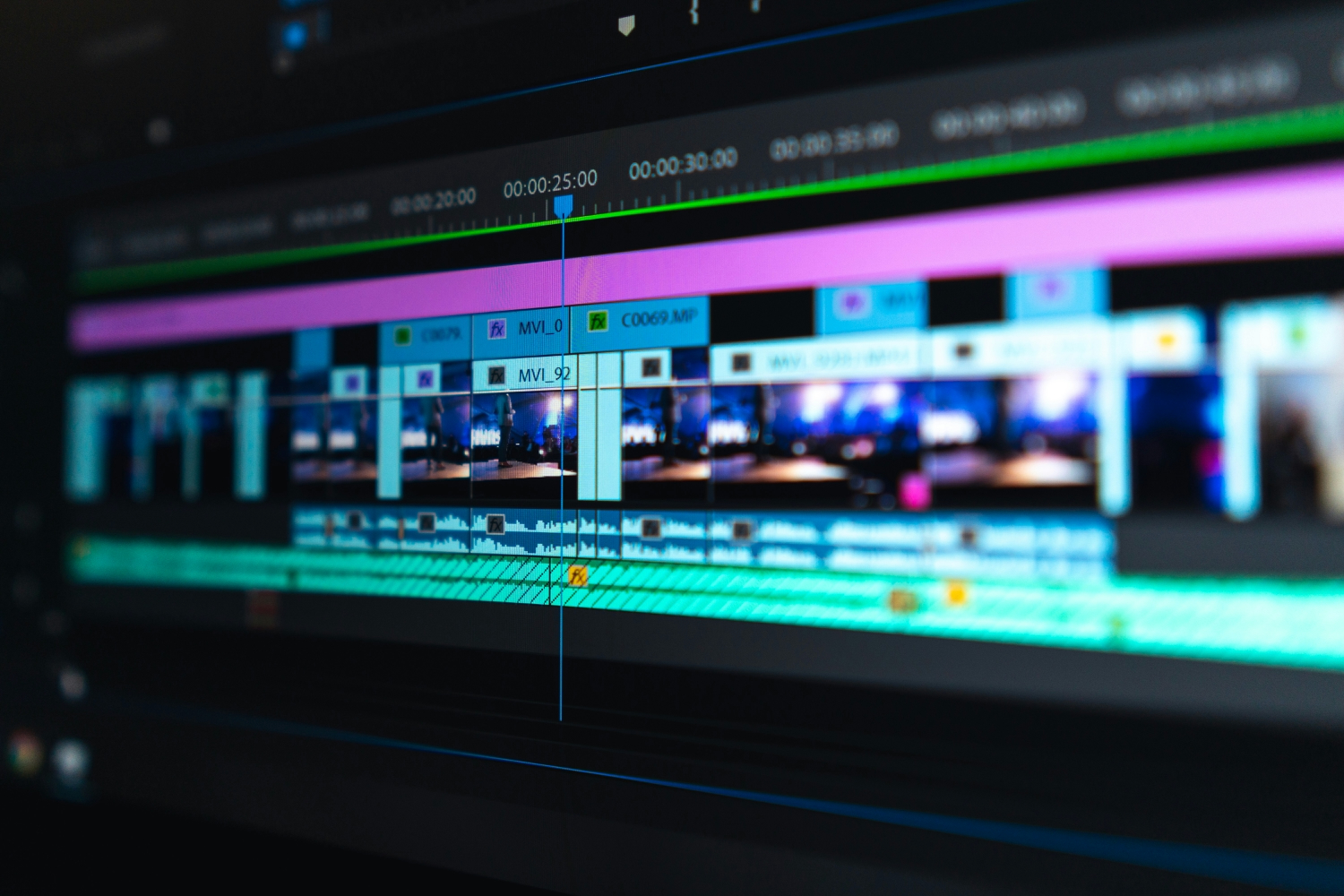


Video editing used to demand expensive hardware, years of practice, and a lot of patience. Today, you can describe a scene in a sentence and watch software assemble it in minutes.
Auto-captions, background removal, script-to-video generators, and one-click highlight reels are now ordinary features, which raises a question every creator, marketer, and filmmaker is asking: will AI replace traditional editing software?
The short answer is no, at least not entirely. The longer answer is more interesting, because AI is changing what “editing” means, who can do it, and which skills matter most.
How We Got Here
Traditional editing software like Adobe Premiere Pro, Final Cut Pro, and DaVinci Resolve is built around a timeline, with clips, layers, keyframes, and effects arranged by hand. This gives editors precise control, but it also creates a steep learning curve. Mastering color grading, audio mixing, and motion graphics can take years.
AI tools approach the problem differently. Instead of asking you to manipulate every frame, they ask what you want to achieve. You provide a script, a few clips, or a text prompt, and the system handles cutting, pacing, captioning, and sometimes even generating the footage itself. A ChatGPT video generator and editor is a good example of this shift: it lets you work through conversation and prompts rather than menus and timelines.
What AI Already Does Well
AI excels at repetitive, time-consuming tasks that eat up editing hours without adding much creative value.
Automatic transcription and captions. Speech-to-text has become fast and accurate enough that captioning a video takes minutes instead of hours. That matters because many viewers watch on mute.
Silence and filler removal. AI can detect pauses, “ums,” and false starts, then trim them automatically. For podcasters and talking-head creators, this alone can cut editing time dramatically.
Smart reframing. Repurposing a horizontal video for vertical platforms like TikTok, Instagram Reels, and YouTube Shorts used to mean manually adjusting every shot. AI now tracks the subject and reframes automatically.
Rough cuts and highlights. Feed an AI tool a long recording and it can surface the most engaging moments, producing a first draft you can refine.
Background removal and cleanup. Rotoscoping was once painstaking frame-by-frame work. AI makes it nearly instant, along with noise reduction, stabilization, and upscaling.
Text-to-video generation. The newest frontier is generating clips from prompts alone. Quality varies, but the technology improves quickly, and it’s already useful for concept visuals, B-roll, and social content.
Where AI Still Falls Short
For all this progress, AI has real limitations that keep traditional software relevant.
Creative judgment. Editing is storytelling. Deciding when to hold on a face for an extra beat, when to cut on action, or when silence will land harder than music requires taste and emotional intelligence. AI can imitate common patterns, but it tends to produce competent, generic results rather than distinctive ones.
Precision control. Professional work often needs exact adjustments: frame-accurate cuts, custom color curves, layered audio, complex compositing. Prompt-based tools can be vague and unpredictable. Sometimes you ask for a small change and get a different result than you expected.
Consistency. Generative video can struggle with continuity. Characters may change appearance between shots, hands and text can look distorted, and physics sometimes behaves strangely. That’s a problem when a project needs a coherent visual identity.
Brand and legal concerns. Businesses need predictable outputs, licensed assets, and clear rights. Questions about training data, copyright, and disclosure of AI-generated content are still evolving, and cautious clients may prefer workflows they can fully control and audit.
Large, complex projects. Feature films, documentaries, and high-end commercials involve hundreds of hours of footage, multiple collaborators, and demanding delivery specifications. Today’s AI tools are not built to manage that complexity on their own.
The Rise of the Hybrid Workflow
The most realistic future is not AI versus traditional software but the two combined. Major editing platforms are already building AI into their timelines, with features like text-based editing, auto-reframing, generative fill, and automatic audio cleanup. Meanwhile, AI-first tools are adding more manual controls to satisfy users who want finer adjustments.
In practice, a modern workflow might look like this:
- Use AI to transcribe footage and generate a rough cut.
- Move into a traditional editor to refine pacing, structure, and story.
- Use AI again for captions, resizing, and audio cleanup.
- Finish with manual color grading and sound design.
The machine handles the grunt work, and the human handles the vision. This approach saves time without sacrificing quality, and it’s already how many professional teams operate.
Who Benefits Most from AI Editing?
Solo creators and small businesses gain the most. Before AI, producing polished video required either a budget or a long learning curve. Now a small business owner can turn a product description into a promotional clip, or a coach can repurpose a webinar into a dozen short videos, without hiring an agency. Tools like a ChatGPT video generator and editor make video production accessible to people who have great ideas but no technical background.
Marketing teams benefit from speed and scale. Producing localized versions, A/B test variations, and platform-specific cuts used to multiply workloads. AI makes it feasible to create many variations quickly.
Professional editors also benefit, though differently. Those who embrace AI can deliver faster and take on more projects, focusing their energy on creative decisions rather than tedious prep work.
Will AI Take Editors’ Jobs?
This is the anxious question beneath the headline. Honestly, some tasks and some entry-level roles will change. Work that consisted mainly of cutting silences, syncing captions, or reformatting clips for different platforms is increasingly automated.
But history offers a useful comparison. Desktop publishing didn’t eliminate graphic designers, and digital cameras didn’t eliminate photographers. They lowered barriers, expanded the market, and shifted the value toward people with strong ideas and good taste. Video will likely follow the same pattern. As production becomes cheaper and easier, the volume of content explodes, and standing out depends even more on storytelling, originality, and craft.
The editors most at risk are those who compete only on technical speed. The ones best positioned are those who combine technical fluency, including comfort with AI tools, with creative direction and client communication.
How to Prepare for What’s Next
Whether you’re a beginner or a seasoned professional, a few habits will help you stay ahead:
- Experiment early. Try AI features in your current software and test standalone tools to learn what they can and can’t do.
- Strengthen your fundamentals. Understanding story structure, pacing, and sound will make you better at directing AI, not just using it.
- Learn to prompt well. Clear, specific instructions produce better results. Prompting is becoming a genuine editing skill.
- Review everything. AI output can contain errors, odd artifacts, or inaccuracies. Human oversight remains essential.
- Stay informed on ethics and rights. Understand the licensing and disclosure expectations of your platform and clients.
Final Thoughts
So, can AI tools replace traditional editing software? For simple, templated, high-volume content, they increasingly can. For nuanced, high-stakes, creatively ambitious work, they remain assistants rather than replacements.
The better question is not whether AI will replace editing software but how editing software will evolve around AI. The timeline isn’t disappearing; it’s getting a smart collaborator. Creators who learn to work with that collaborator, using AI for speed and humans for vision, will be able to make better videos, faster, than ever before.
The future of video editing isn’t man versus machine. It’s a partnership, and the people who understand both sides will tell the best stories.
