

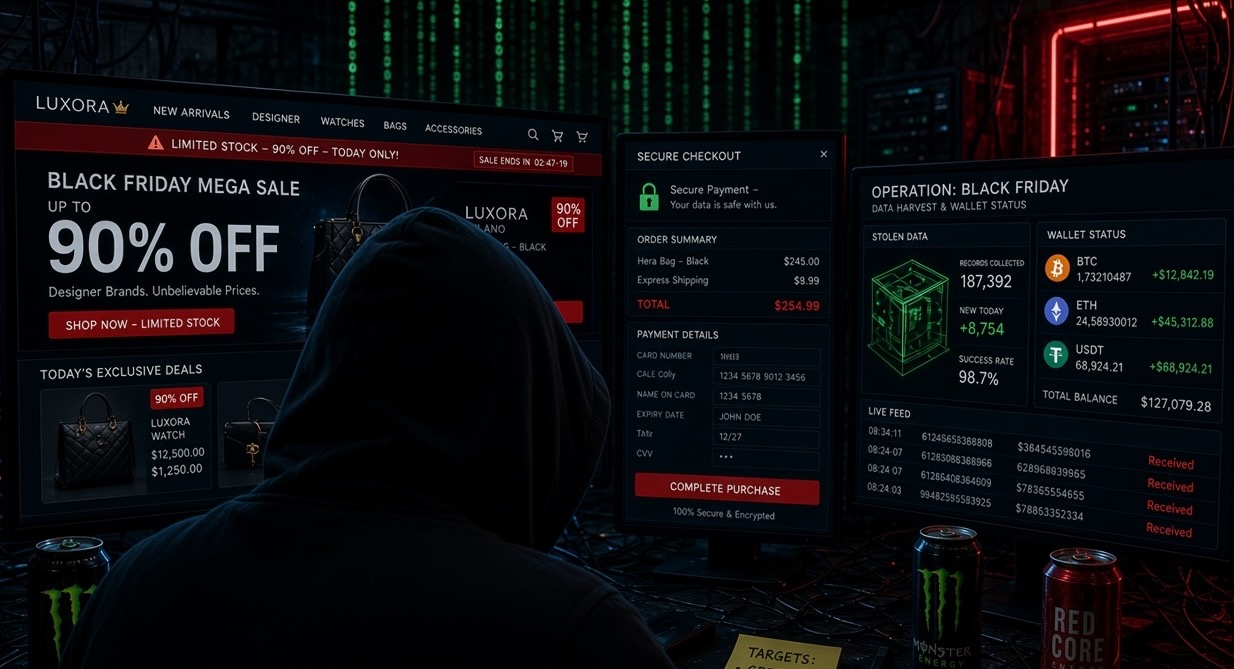


Black Friday is quickly approaching and while you’re shopping for bargains, cyber criminals are looking for victims after new research from Norton showed a 155 per cent surge in blocked fake online store attacks.
In Australia, more than 2.25 million attacks were blocked during last year’s shopping period between October and December 2025.
The latest 2026 Norton Insights report: Holiday Scams shows that 13 per cent of Australians have fallen victim to a holiday shopping scam.
And 94 per cent of those victims lost money.
On average victims lost $1,327 but the highest reported loss was around $30,000.
The research has also highlighted some emerging risks including AI shopping assistants used by 57 per cent of Australians that recommend or completed a purchase from an unfamiliar retailer during the most recent holiday shopping season.
Only 46 per cent of Australians are confident an AI shopping assistant would be able to recognise and avoid a fraudulent website.

Alarmingly 27 per cent have admitted purchasing from a seller they suspected might have been a scam because the deal was too good to miss.
Social media is also playing its part, with 42 per cent of holiday shopping scam victims admitting they were scammed through these platforms.
Of those shopping for trending gifts like Labubu or Jellycat, 36 per cent encountered suspicious websites or sellers.
Dean Williams, principal systems engineer at Norton, says seasonal discounts, high-demand gifts, and more convincing fraudulent websites are creating a perfect storm for scammers.
“Scammers know people are hunting for the best deals, particularly around major shopping events like Black Friday and Cyber Monday,” Williams says.
“They can create convincing online stores, use familiar branding and advertise heavily discounted products to make fraudulent offers appear legitimate.
“What’s concerning is that some shoppers are prepared to take a chance even when they suspect something isn’t right.
“Scammers can exploit that urgency to grab a bargain before it’s gone, but a heavily discounted product isn’t worth risking your money or personal information.”
Williams says shoppers need to be extra cautious when following advertisements that lead them to unfamiliar retailers.
“Fake shopping websites can look almost identical to legitimate retailers, complete with professional product images, customer reviews and convincing checkout pages,” he said.
“AI tools can also make it easier for scammers to produce realistic content at scale.
“Shoppers shouldn’t rely on how professional a website looks.

“If you’re clicking through from a social media advertisement or buying from an unfamiliar retailer, check the website address, look for independent reviews and make sure the business is legitimate before entering your payment details.”
Williams says while AI shopping assistants can make your shopping and comparing prices easier and faster would be wrong to assume the technology can pick out and detect fraudulent retailers.
“AI shopping assistants are changing how people discover products and make purchases, but a recommendation from an AI tool isn’t a guarantee that a retailer is legitimate,” Williams says.
“The risk becomes greater when shoppers rely on an AI agent to do more than recommend a product.
“If you’re allowing a tool to navigate websites or complete purchases on your behalf, it’s important to understand what information it can access and check where your money is going.
“AI can help you find a bargain, but it shouldn’t replace your own judgement about whether a seller can be trusted.”
Norton’s tips on how to avoid holiday shopping scams
- Check the website before you buy.Look for misspelled URLs, search the store name with “scam” or “reviews,” and use a tool like Norton Safe Web to flag malicious sites.
- Skip the ad and go straight to the retailer.Type the store’s address into your browser or open its official app instead of clicking a social ad.
- Use AI-powered scam protection.Norton 360 Deluxe helps spot scam links, fake websites and malicious downloads before they do damage.
- Double-check what AI recommends.Vet any retailer an AI assistant suggests before you confirm a purchase.
- Pay with protection.Use a credit card or a payment service with buyer protection. Avoid sellers who ask for bank transfers, gift cards or cryptocurrency.
- Track packages at the source.Check delivery status in the retailer’s or carrier’s app, not through links in texts or emails.
