

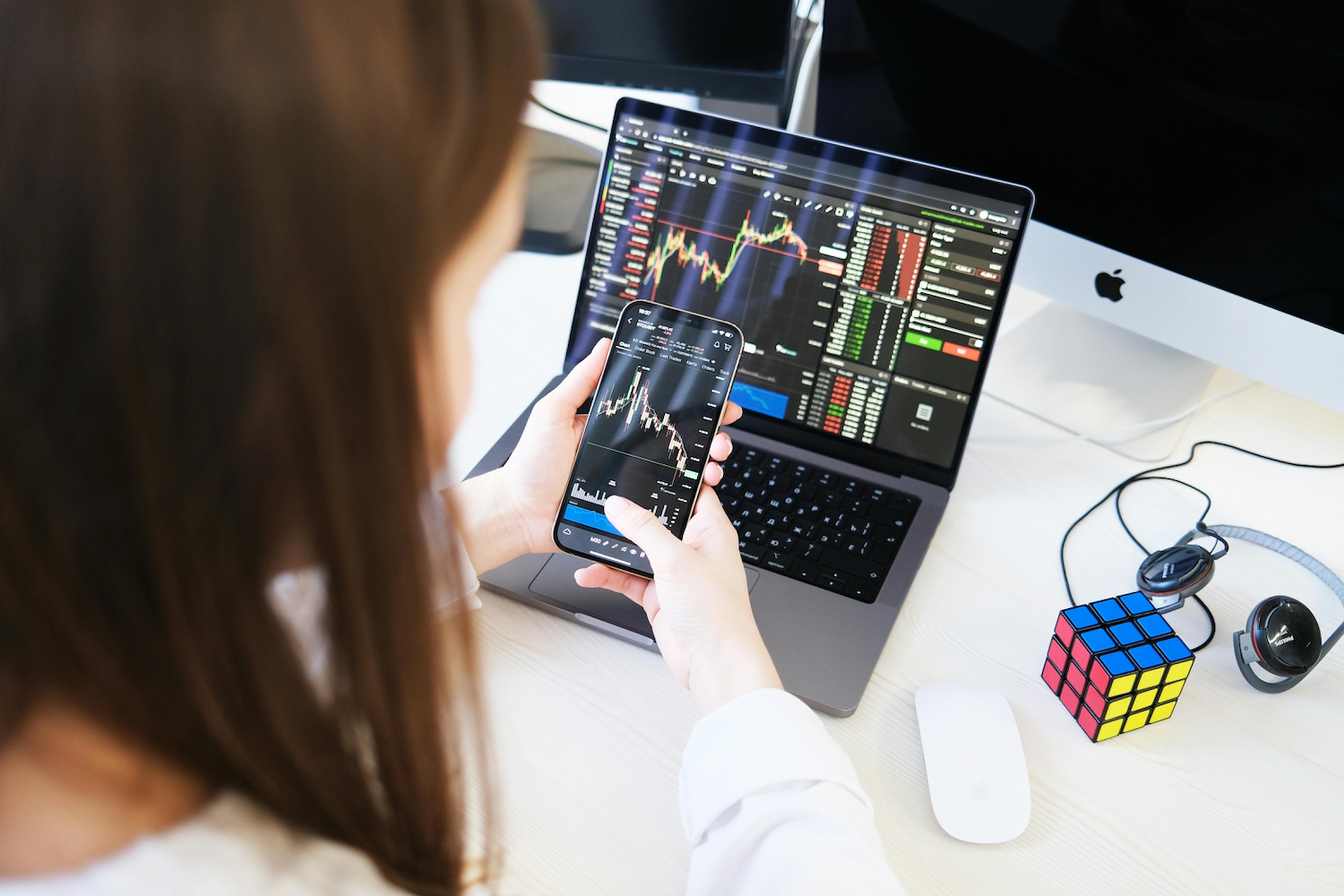


Trading has certainly changed in recent years. While technology plays a part, the biggest drivers of said change are younger investors: namely, Millennials and Gen Z-ers.
Younger investors tend to trade more frequently and rely more heavily on mobile-first platforms, while showing a higher tolerance for speculative assets. They also expect more transparency, lower fees, and near-instant execution.
What does this mean for brokers and fintech apps (and even legacy institutions)? They need to rethink everything from UX design to risk disclosures.
Because these trends and changes in trading don’t just affect how trading happens: they’re also reshaping what gets traded, when people enter positions, and why markets move in short bursts.
All this to say, if you’re investing today, you’re operating in an environment partially defined by these behaviors, and that’s true whether you’re 22 or 52. So, let’s break it down properly and give you something you can actually use in your own trading strategy.
What’s Different About Millennial and Gen Z Traders?
You’ll often hear that younger generations, including investors, are more digital. And while this is true, it’s also an oversimplification.
What do we mean by this? Being “more digital” doesn’t just mean spending more time online. It also implies different ideas and behaviors. In some cases, radically different behaviors and ideas.
The first major difference between the newest crop of investors and older ones is that the former enter markets earlier. According to FINRA, 56% of Gen Z-ers own at least some investments (mostly crypto), and a growing share starts before age 25. Obviously, most do so through mobile apps rather than traditional brokerage onboarding.
Second, they prefer short feedback loops. They don’t wait months to evaluate a position. Instead, they check it daily, sometimes hourly. And that mindset drives demand for real-time analytics, alerts, and social sentiment indicators.
Third, they mix investing and trading. Older generations tended to separate long-term portfolios from speculative plays. Younger traders blur that line, holding ETFs alongside crypto, options, and leveraged instruments.
The Platforms Had to Adapt Fast
How are all these changes affecting platforms? There’s no need to wonder; just look at the rise of apps like Robinhood or eToro, and you’ll see the change very clearly.
Clean interfaces, zero-commission trades, and social features: these are the baseline expectations now.
Today, platforms compete on:
- Execution speed (delays destroy trust)
- Cost structure (hidden fees get called out publicly)
- Education tools (in-app learning over external courses)
- Community features (copy trading, sentiment feeds)
Even institutional players have started copying this playbook. You see it in revamped mobile apps from firms like Charles Schwab and Fidelity Investments.
But there’s tension here. Simplicity can (and often does) mask risk. And younger traders often discover that the hard way.
The Hidden Mechanics Behind “Free” Trading
Zero-commission trading sounds fantastic to younger investors. But what many don’t realize is that the cost structure didn’t disappear: it just shifted.
Many platforms route orders through market makers and receive compensation in return, a model known as payment for order flow (PFOF). The European Securities and Markets Authority (ESMA), as well as the U.S. Securities and Exchange Commission, has flagged that while this can lower visible costs, it may also introduce conflicts of interest that affect execution quality depending on how orders are routed (in fact, the EU has actually moved to ban PFOF).
In short, you don’t see a fee on the ticket. But execution price, spread, and slippage all determine your real cost. They may not be that visible, but rest assured, they’re there and they all count.
In practice, this shows up in small ways that compound. A slightly wider spread here, a marginally worse fill there… It doesn’t look like much on a single trade. However, over time, it adds up, especially if you trade frequently.
So you need to evaluate costs differently. Don’t just ask, “Is this trade commission-free?” Ask:
- What’s the spread during volatile periods?
- How consistent is execution speed?
- Do fills match quoted prices?
And that’s where serious traders separate themselves. They track effective cost, not advertised cost.
The Social Layer: Opportunity and Risk
You already know that social influence matters, but you might underestimate its impact. Platforms like Reddit (especially r/WallStreetBets) and TikTok act as real-time idea generators for younger investors. Trades spread quickly, narratives form, and price movements can accelerate before fundamentals catch up.
The GameStop short squeeze is the obvious case study. Retail traders coordinated (loosely, not centrally), drove demand, and forced institutional players to react.
But here’s what doesn’t get enough attention:
- Signal quality varies wildly
- Timing matters more than conviction
- Exit strategies are often missing
In practice, you’ll see traders enter based on hype, but hesitate to exit when momentum fades. That’s where losses stack up.
Younger traders are especially exposed to:
- Recency bias (recent wins equal perceived skill)
- Survivorship bias (only seeing successful traders online)
- Herding behavior (validated by likes/comments)
The CFA Institute has long documented that overconfidence leads to overtrading, which then leads to underperformance among retail investors. Or, as they put it, it “rarely leads to enhanced results.”
Moral of the story? Be careful. And add a quick “self-check” before entering a trade:
- Would you take this trade without social confirmation?
- Do you know the downside in % terms?
- Are you reacting or executing a plan?
You don’t need much else. Just clear, blunt questions and honest answers.
Asset Preferences: What Younger Investors Trade
Younger traders do diversify, but not in the traditional sense. They tend to spread capital across different types of instruments rather than sticking to asset classes defined by portfolio theory.
1. Crypto and High-Volatility Assets
Crypto adoption skews younger. A report from the Federal Reserve notes that younger adults were significantly more likely to hold digital assets compared to older demographics.
2. Options and Leveraged Products
Options trading has surged among retail investors. Platforms have greatly simplified access, but it’s foolish to think that complexity went away. Mispricing risk and misunderstanding Greeks still hurt inexperienced traders.
- Forex and CFDs
Forex is where a lot of younger traders start experimenting with macro-driven ideas. Interest rate expectations, commodity cycles, and central bank signals all show up quickly in currency pairs, and they tend to move in ways that reward short-term positioning.
That’s why pairs like AUD/USD get attention. They often react quickly to shifts in interest rate expectations and global risk appetite. When you trade AUD/USD CFD positions through reputable and established platforms, you’re effectively taking a leveraged view on those macro shifts, with pricing and execution speed becoming critical when volatility picks up.
But leverage goes both ways. And younger traders sometimes underestimate how quickly losses scale.
What This Means for Market Behavior
Retail participation changes liquidity patterns, especially in smaller-cap stocks and high-beta assets. It also increases short-term volatility, because decisions are often driven by sentiment rather than long-term fundamentals.
You’ll notice:
- Faster price spikes (and reversals)
- Higher correlation between social chatter and volume
- Shorter holding periods
Institutional investors track this now. In fact, some hedge funds even monitor Reddit and Twitter sentiment as part of their strategy. That alone tells you this isn’t a passing trend.
Practical Talk: How You Should Approach Trading Today
Let’s move from observation to execution. You don’t need to copy Gen Z behavior. However, you do need to understand the environment they’ve created.
1. Separate Your Time Horizons
Run two tracks:
- Long-term investments (ETFs, equities)
- Short-term trades (options, CFDs, crypto)
Importantly, don’t mix the logic between them. A trade isn’t a “long-term hold” just because it moved against you.
2. Treat Social Signals as Inputs
Use platforms like Reddit or TikTok to spot trends early. But—and this is key—validate before acting.
Check:
- Volume confirmation
- News catalysts
- Liquidity conditions
If the only reason to enter is “everyone’s talking about it,” you’re already late.
3. Understand the Instrument Before You Use It
This sounds obvious, but it’s where most mistakes happen.
If you trade CFDs or options, know:
- Margin requirements
- Leverage impact
- Spread costs
- Overnight fees
Keep in mind that regulators like the U.S. Securities and Exchange Commission consistently warn that retail traders underestimate these factors. So, no, not everyone actually takes time to fully understand the instrument before they use it.
4. Build an Exit Plan Before You Enter
You don’t improvise exits in volatile markets.
Set:
- Target price
- Stop-loss level
- Time horizon
And stick to it (even when it’s uncomfortable).
5. Limit Position Size
Conviction often peaks right before volatility spikes.
Keep position sizes consistent relative to your portfolio. That’s how you survive drawdowns without emotional decision-making taking over.
What Experienced Traders Do That Newer Investors Often Miss
There’s a gap between newer traders and experienced ones, but it isn’t access to information. It’s how decisions get made under pressure. That currently seems to be the biggest difference.
Newer traders often react. Experienced traders operate from pre-defined conditions. And you’ll see this in small but important differences.
Newer traders chase momentum after it’s visible. Experienced traders wait for confirmation, and they do this even if it means missing the first move.
Next, newer traders increase position size after a win because confidence tends to spike quickly. Experienced traders keep sizing consistent, because they know variance doesn’t care about recent results.
Also, newer traders are often glued to charts, adjusting decisions in real time. Experienced traders define the trade, execute it, and step away unless invalidation levels are hit.
And exits? Now, that’s where this divide shows particularly clearly.
In practice, most experienced traders decide exits before they enter (because this often determines how profitable a trade will actually be). They know where the trade breaks, not just where it might work. This removes hesitation when volatility picks up.
You can apply this immediately with a simple rule set:
- Define entry and invalidation before placing the trade
- Fix position size relative to your portfolio (not your conviction)
- Limit decision-making during the trade itself
- Review outcomes after, not during
If this sounds rigid, it’s supposed to be. Because once you’re in a live position, emotion will try to renegotiate your plan. This is pretty common, so don’t think you’re immune to it. Instead, have structure and a plan. It’s the only way to prevent that from happening.
The Gaps Between Theory and Reality
There’s also a gap between how trading is marketed and how it actually plays out. And it pays to learn the difference because most novice traders learn about execution realities too late.
The “Accessibility Trap”
Low barriers to entry make trading seem simple. But simplicity at the interface level often hides complexity underneath.
Sure, you can open a leveraged position in seconds, but unwinding it during high volatility? That’s another story.
The “Community Confidence Effect”
Seeing others make quick and big gains can create a false sense of certainty.
It’s easy to assume:
- The trend is stronger than it is
- The downside is limited
- The timing still works
Unfortunately, that’s rarely true.
The “Platform Incentive Misalignment”
Platforms benefit from activity. More trades mean more revenue (even with zero commissions, spreads and order flow still matter).
Of course, this doesn’t mean platforms are acting against you, but it does mean your incentives aren’t perfectly aligned.
For Trading Platforms: What You Need to Get Right
If you’re on the platform side (or advising one), know that younger investors are forcing some non-negotiables.
Transparency Over Marketing
Most younger users fact-check everything now. So hidden fees or vague risk disclosures are an absolute no-go. They won’t last long before they’re exposed publicly.
Education That Matches Behavior
Static articles are not the preferred method of learning for newer investors. You need:
- Interactive tools
- Scenario-based learning
- Real-time risk indicators
Importantly, they have to be embedded in the trading experience, not separate from it.
Speed and Stability
Latency issues get noticed instantly now. Also, they get shared instantly.
If your platform lags during volatility, users will leave, and they’ll tell others why.
Where All This Is Headed
A few changes are already taking shape.
- AI-driven trading assistants are becoming standard
- Social trading will integrate more deeply into platforms
- Regulation will tighten around retail protection
And in case we haven’t made it obvious yet, the line between investing, trading, and content consumption will keep blurring. Companies that adapt quickly will stay competitive. Those that don’t will lose relevance faster than expected.
FAQs
Are younger investors more successful?
While there are more investors now, they’re not necessarily more successful. Some outperform through agility and information access, but many underperform due to overtrading and poor risk management (a trend noted in multiple studies cited by the SEC and academic research).
Is social trading reliable?
It’s useful for idea generation, yes. But it’s not reliable for execution decisions without validation.
Should you follow Gen Z strategies?
You should understand them. Then adapt what works for your risk tolerance and goals.
