

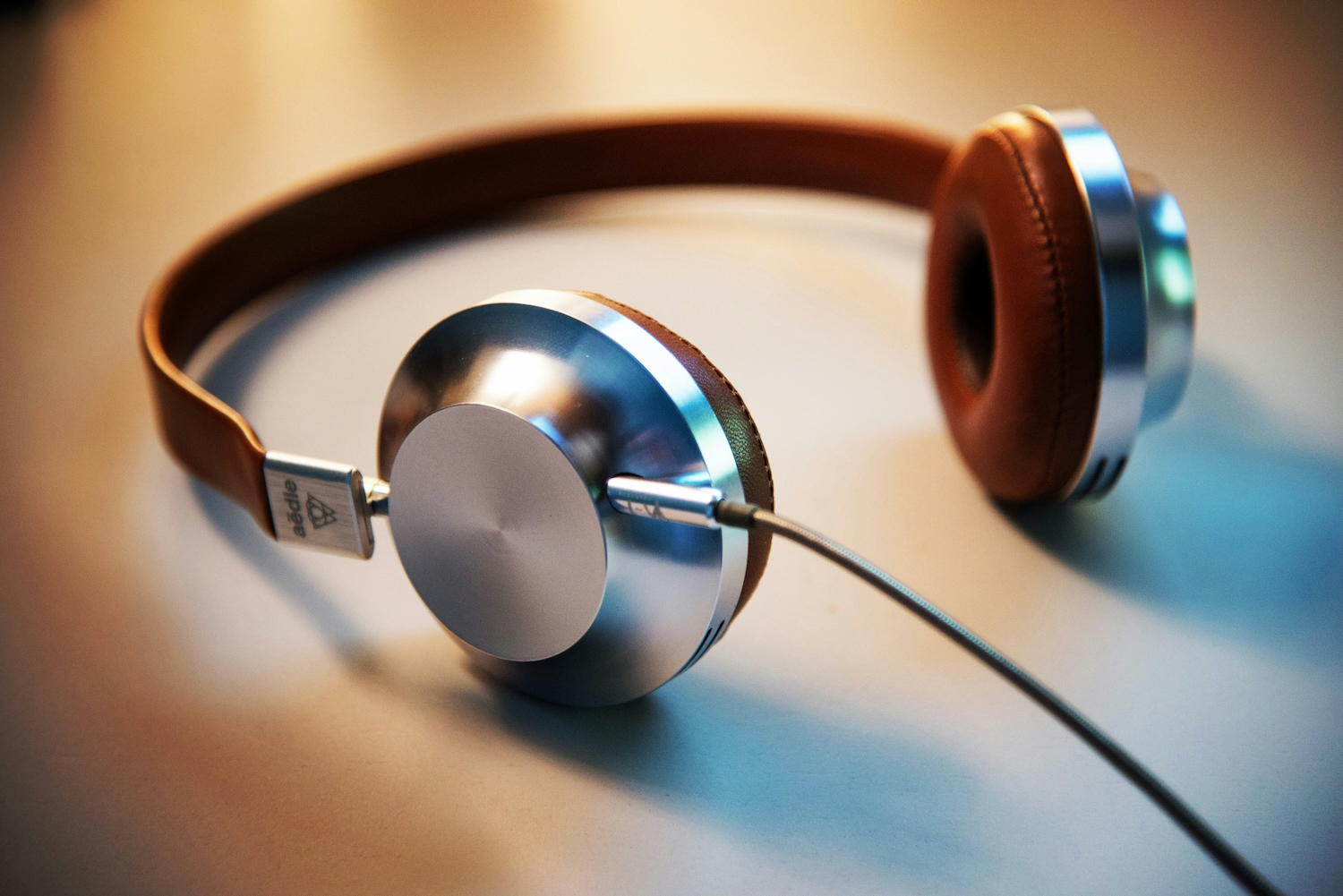


A folded pair of headphones sits beside a travel pouch on a plain desk. The camera moves just enough for light to travel across the ear cup, then stops before the product becomes a blur.
That would be my starting point for a gadget video: one recognisable object, one controlled movement, and a clear reason for the viewer to keep watching.
I would treat this as a creative concept, not a product review or a claim that I had tested a particular model. The headphones could be an original design or an existing product shown with permission. Seedance 3.0 would help turn suitable reference images and a written brief into a short reveal, while any factual specifications would be checked separately.
Begin with the shape people need to recognise
My first reference would show the headphones from a three-quarter angle, with both ear cups and the headband visible. A second photograph could show the folded position. I would choose images with consistent colour and lighting so the model is not asked to reconcile two different-looking products.
The travel pouch would stay in the background as a scale reference. I would avoid adding a phone, watch, laptop, and coffee cup to the same composition. Those objects could make a lifestyle scene later, but the opening needs to establish the headphones. A clean background also makes it easier to spot a changing hinge or an extra control button.
I would write down the details that must remain stable: the headband curve, the ear-cup shape, the finish, and the placement of any visible controls. These notes would be the basis of the review, rather than a vague judgement about whether the result looks premium. A convincing shot still needs to depict the intended object.
Use movement to reveal a detail
For the first Seedance 3.0 shot, I would ask for a gentle camera slide across the front ear cup while the headphones remain stationary. The light would be soft and directional, revealing texture without creating a harsh reflection. The camera would end in a composition that could hold for a title.
Seedance 3.0 offers image-to-video and multimodal reference workflows, so I would select the mode that fits the available material before adding more inputs. A clear product image and a restrained prompt may be enough. If a movement reference is needed, I would explain that it guides the camera speed, not the product’s appearance.
I would check the selected model’s duration, resolution, and aspect-ratio options in the generator. For this concept, a short stable shot would be more useful than an extended orbit that gradually changes the headphones. The setting should follow the creative need, and the displayed credit cost should be considered before generating several alternatives.
Keep the reveal separate from the demonstration
The next shot could show the headphones resting open beside the pouch. I would not ask the model to unfold every hinge in one continuous movement unless the reference material makes that mechanism clear. A cut between folded and open views can communicate portability without inventing how the joints work.
That distinction matters for gadget content. A generated reveal can explore presentation, but it does not establish battery life, comfort, noise cancellation, or audio quality. If the finished video includes those claims, they need independent support. I would keep this particular concept focused on appearance and the way the product fits into a travel setup.
With Seedance 3.0, I would develop the visual sequence first and add verified wording in a conventional editor. The product name, specifications, and any price should remain editable graphics. Generated lettering is not the right place to entrust details that readers may use to compare products.
Fix the hinge before changing the backdrop
Suppose the first draft looks smooth but the headband becomes thinner halfway through the shot. I would simplify the movement and strengthen the reference description. The camera could move less, and the product could occupy more of the frame. Changing the desk colour would not address the problem.
If an ear cup rotates in an impossible direction, I would remove that action entirely and use a stationary product composition. A controlled light movement can provide a sense of depth without requiring the object to transform. The goal is not to make every component move; it is to help the viewer understand the design.
I would compare Seedance 3.0 outputs side by side with the reference images at several points in the clip. The opening frame alone is not enough. A small change near the end may become obvious once a title appears beside it, drawing the eye back to the product.
Give the soundtrack a modest role
I would choose a quiet, original sound bed with a soft accent as the light reaches the ear cup. It would provide pacing without implying that the audience is hearing the headphones themselves. A product video played through someone else’s speakers cannot demonstrate the sound quality of a pair of headphones.
Seedance 3.0 includes generation with audio, which could be useful for exploring that atmosphere. I would still listen carefully for unexpected clicks or distracting background sounds. The final mix could be replaced or adjusted in the editor, using material cleared for the intended publication.
If narration were needed, I would keep it short and descriptive. A line about the proposed travel setup could accompany the open headphones and pouch. I would avoid a dramatic voiceover listing unsupported superlatives. The clean visual treatment should carry most of the impression.
Design the short version from the start
For a vertical clip, I would stack the headphones and pouch within the central frame and leave space above for the name. For a horizontal version, the pouch could sit to one side. I would not assume that cropping the same wide shot will preserve the composition in both formats.
Before making additional Seedance 3.0 variations, I would identify the one version that matters most for the project. A creator preparing a social post may need the vertical edit first; someone building a website feature may prefer the wider layout. That decision can save time spent polishing footage that does not fit its destination.
My final check would be to watch the whole reveal on a phone, pause on the closing frame, and compare the object with the approved image. The name should be readable, the silhouette should remain consistent, and the movement should have a clear stopping point. A simple gadget reveal succeeds when the viewer remembers the product rather than the effect used to introduce it.
